The Complete Guide to Hudson Trailer Company: Elevating Mobile Hospitality
A custom mobile business is more than a vehicle; it is a strategic brand asset, a point of sale, and a physical representation of a company’s commitment to quality. This complete guide to Hudson Trailer Company explores how a specialized design and fabrication partner transforms vintage vehicles and custom trailers into sophisticated mobile businesses for hospitality leaders, entrepreneurs, and national brands.
From initial concept to final execution, Hudson Trailer Company operates as a design-build partner that prioritizes operational workflow and brand identity over simple trailer manufacturing. The result is a purpose-built mobile unit engineered to support a specific business model, whether it's a high-volume coffee service, a luxury mobile bar, or an experiential marketing activation.
The Vision Behind Hudson Trailer Company: Bespoke Mobile Hospitality
Standard trailer builders often focus on a limited set of floor plans and features. Hudson Trailer Company was established in 2015 to bridge the gap between vintage aesthetics and modern commercial utility, offering a fundamentally different approach. The company distinguishes itself not as a "trailer builder" but as a "mobile business designer," focusing on creating one-of-a-kind units for a diverse range of clients, including luxury hospitality groups, boutique hotels, corporate brands, and ambitious entrepreneurs.
This philosophy is built on a portfolio-driven history of successful projects across the United States. Each build is a collaborative effort to translate a client’s brand and operational needs into a functional, thoughtfully designed mobile environment.
A Legacy of One-of-a-Kind Builds
The company’s expertise evolved from vintage vehicle renovations to complex custom fabrications, always grounded in skilled, Jacksonville-based craftsmanship. This deep experience is why brands like Kohler and Treehouse Hotels have trusted HTC to develop and execute their mobile food and beverage concepts. The focus is on creating units that not only perform commercially but also align with the high standards of an established brand identity.
Elevating the Mobile Experience
The goal is to move beyond the conventional "food truck" stereotype and create mobile units that feel like an extension of a permanent property or brand. Visual identity plays a critical role in the operational success of a mobile business, serving as a powerful marketing tool that attracts customers and communicates quality. The Hudson Trailer Company mission is to fabricate purpose-built mobile businesses that reflect a client’s unique concept and brand identity.
Mobile Platforms: From Vintage Airstreams to Compact Piaggio Apes
The foundation of any successful mobile business is the platform it's built upon. The selection of the right vehicle or trailer is a strategic decision based on the proposed menu, service workflow, branding, and site constraints. Hudson Trailer Company works with a wide array of platforms, each offering distinct advantages for specific business models.
The character of a vintage step van offers a different customer experience than a modern, custom-built trailer. Compact platforms like Tuk Tuks and Piaggio Apes can be ideal for indoor activations or venues with limited space, while the polished aluminum of a renovated Airstream communicates timeless luxury. The key is to match the platform to the operational and aesthetic goals of the project.
Specialized Coffee and Beverage Units
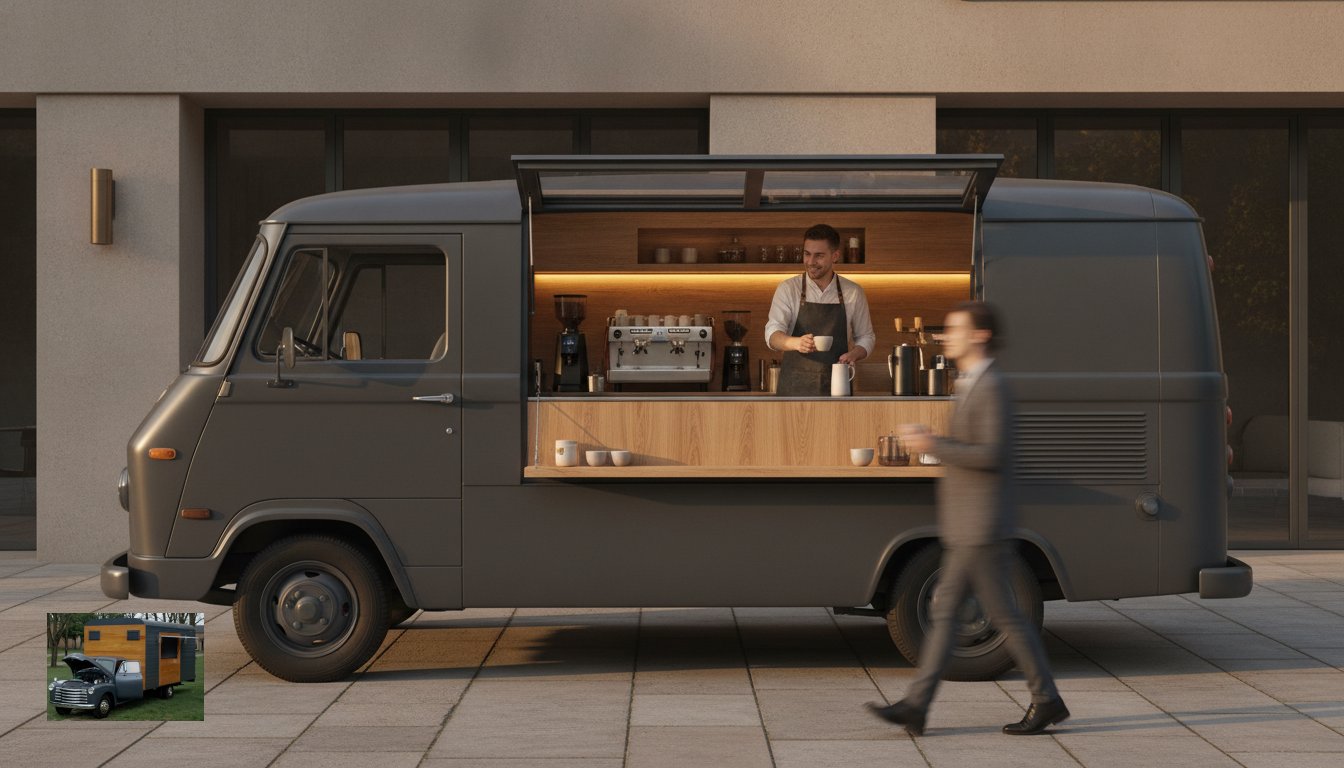
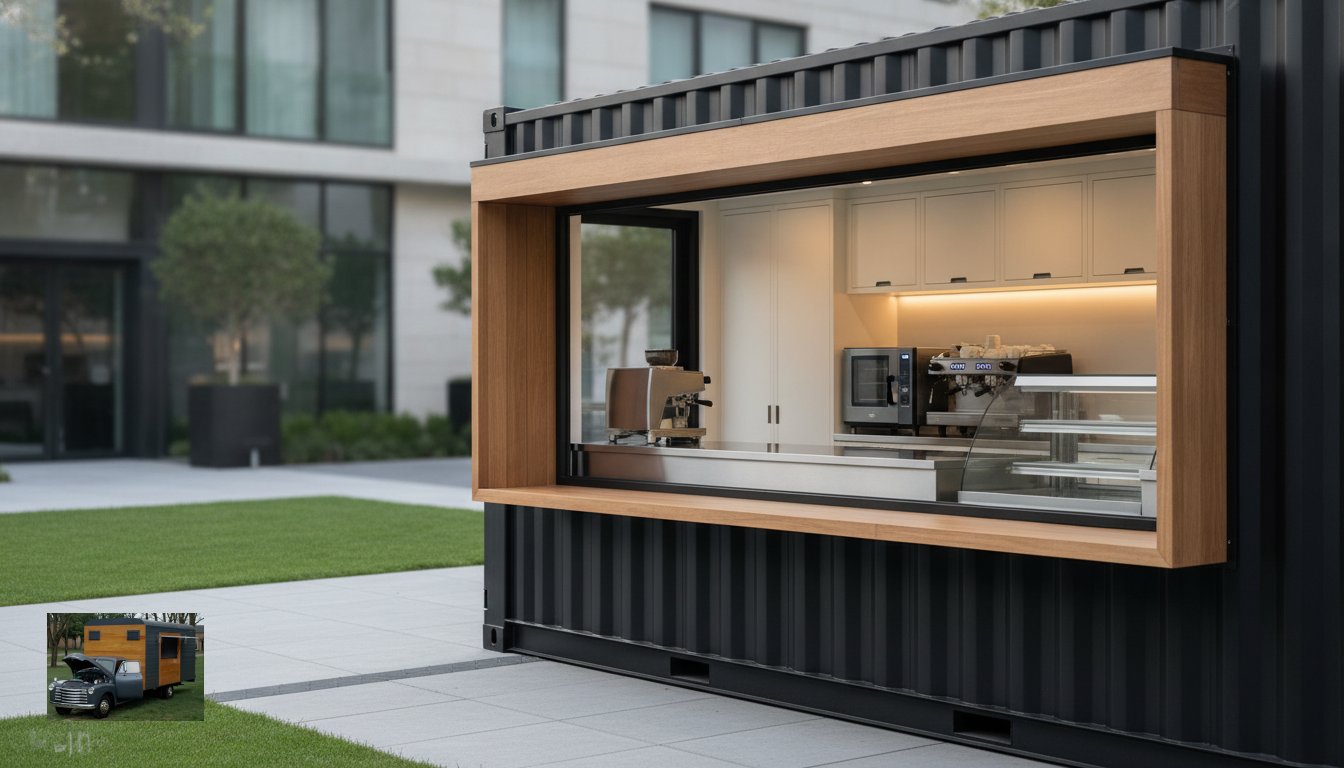
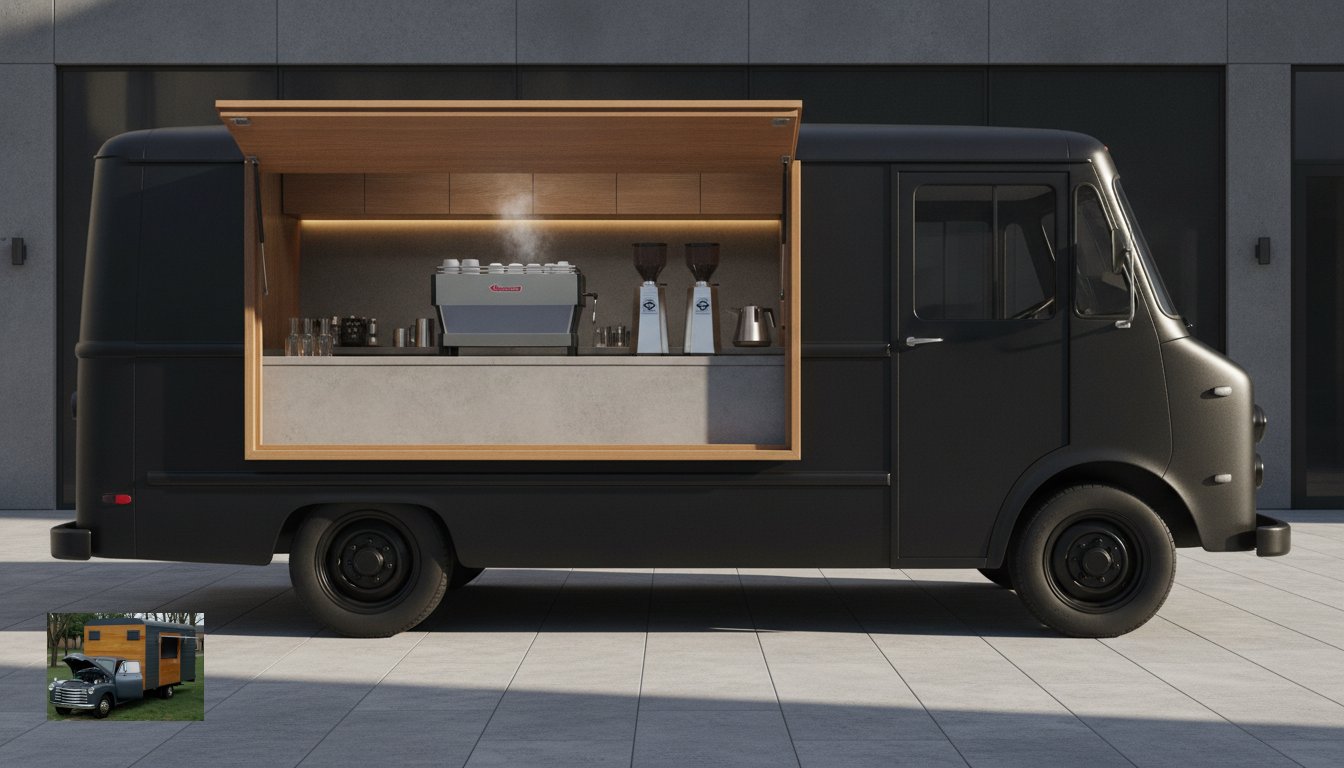
Mobile beverage service requires highly specific design considerations. For Coffee Shop Trailers, layouts are planned around high-volume espresso workflows, considering everything from grinder placement to cup storage. Similarly, engineering Mobile Bar Trailers involves planning for speed of service, with integrated ice management, refrigeration, and draft systems. These specialized units, which can include conversions of vintage horse trailers, are designed for efficiency and durability in demanding commercial settings.
Vintage Vehicle Transformations
Breathing new life into a classic vehicle is a complex process of preservation and modernization. The conversion of Vintage Step Vans into commercial kitchens requires structural reinforcement, utility integration, and custom fabrication that respects the vehicle's original character. Likewise, restoring and repurposing Airstreams for luxury retail or hospitality means installing modern electrical and plumbing systems while maintaining the distinctive aesthetic that makes them so appealing. The challenge is to deliver a commercially compliant unit that still feels authentic.
The Integrated Design and Fabrication Process
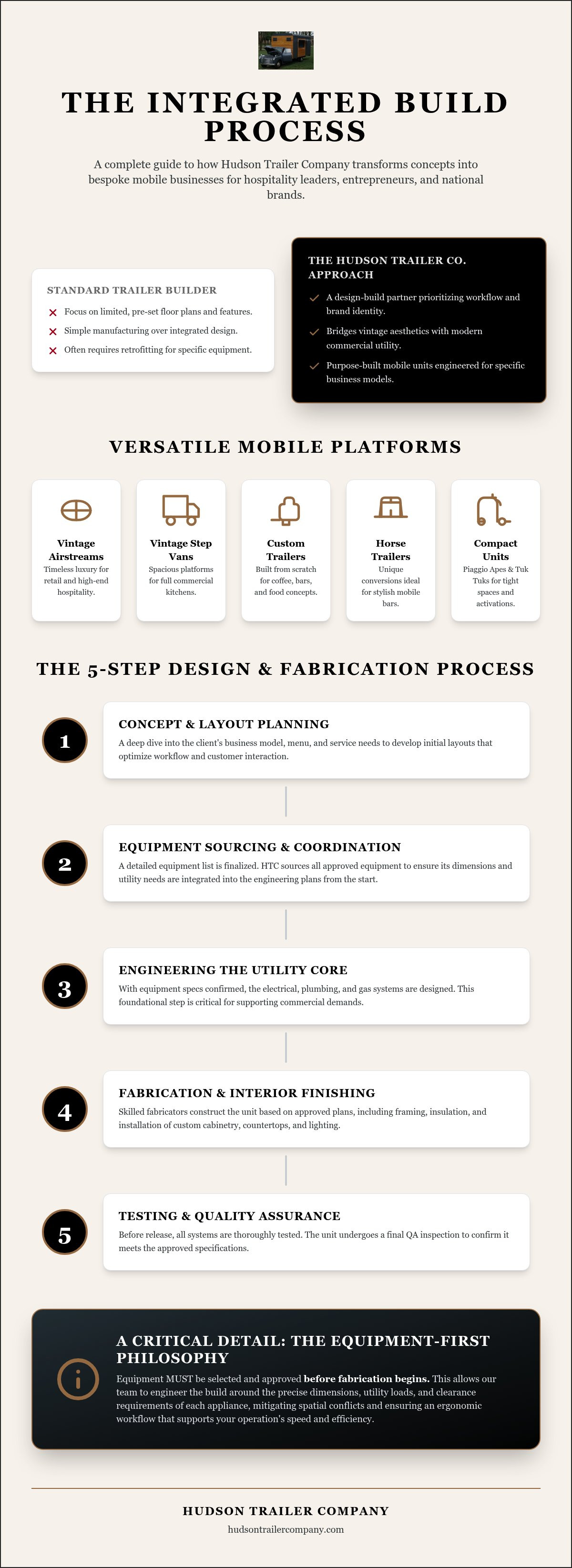
A successful mobile business build depends on a methodical, integrated process where design, equipment, and utilities are planned in concert before fabrication begins. This approach minimizes costly changes and ensures every component works together as a cohesive system. The Hudson Trailer Company process is structured to provide clarity and confidence at every stage.
Concept Development & Layout Planning: The process starts with a deep dive into the client's business model, menu, and service requirements. Initial layouts are developed to optimize workflow and customer interaction within the chosen platform.
Equipment Sourcing & Coordination: Once the layout is refined, a detailed equipment list is finalized. HTC prefers to source and coordinate all equipment to ensure its dimensions, utility requirements, and ventilation needs are integrated into the engineering plans from the start.
Engineering the Utility Core: With the equipment specifications confirmed, the electrical, plumbing, and gas systems are designed. This foundational step is critical for supporting the demands of commercial operation.
Fabrication & Interior Finishing: Skilled fabricators construct the unit based on the approved engineering plans. This phase includes framing, insulation, and the installation of custom cabinetry, countertops, and lighting.
Testing & Quality Assurance: Before the project is released, all systems are thoroughly tested. The unit undergoes a final quality assurance inspection to confirm it has been built according to the approved specifications.
Equipment Coordination and Workflow Engineering
A core element of the complete guide to Hudson Trailer Company is understanding its integrated approach to equipment. Equipment must be selected and approved before fabrication begins. This allows the team to engineer the build around the precise dimensions, utility loads, and clearance requirements of each appliance. Attempting to retrofit a unit for client-provided equipment after the fact often leads to spatial conflicts and utility shortfalls. By managing equipment coordination, HTC mitigates these risks and designs for an ergonomic flow that supports the speed and efficiency of the client's operation.
Technical Specifications: Utilities and Finishes
The utility systems in an HTC build are not one-size-fits-all; they are custom-configured for each project. The electrical service is sized based on the actual connected load of the approved equipment, which can range from a modest service for a simple bar to a substantial power system for an all-electric kitchen. Plumbing systems—including fresh and waste tanks, water heaters, and filtration—are also designed to meet the specific operational needs and local regulatory guidelines provided by the client. Finishes and materials are selected based on the project's design goals, budget, and durability requirements, and can include options like stainless steel, wood countertops, and custom architectural paneling.
Custom Solutions for Brands, Hospitality, and Entrepreneurs
While Hudson Trailer Company has a strong portfolio in the luxury hospitality sector, its clients include a broad spectrum of businesses. The common thread is a need for a high-quality, purpose-built mobile unit that reflects a strong brand identity and supports a specific commercial goal. This includes entrepreneurs launching their first mobile concept, established food and beverage businesses expanding their footprint, and national brands executing experiential marketing campaigns.
Mobile units offer a flexible way to activate underutilized spaces, test new markets, and bring a brand directly to its customers. They can serve as primary points of sale for new businesses or as ancillary revenue streams for established properties.
Strategic Opportunities for Commercial Properties
For hotels, resorts, and developers, mobile units can enhance guest amenities without the cost and timeline of permanent construction. A mobile bar can service a pool area or event lawn, while a coffee trailer can serve a lobby or conference center. This flexibility allows properties to move assets as needed to meet guest demand. A well-designed mobile unit can become a valuable operational asset that extends a property's brand presence. For example, mobile bars are an excellent solution for Golf and Country Clubs looking to create a unique 19th-hole experience.
Experiential Marketing and Pop-Up Retail
Brands are increasingly using mobile units for high-impact marketing campaigns. Experiential Activation Trailers can be designed for national roadshows, product sampling tours, and immersive brand events. For retailers, converting a vintage van or Airstream into a mobile boutique creates a memorable shopping experience that can travel to festivals, markets, and private events. HTC works with clients to coordinate branding, signage, and custom paint to create a cohesive and compelling mobile presence.
Working with Hudson Trailer Company: Timeline and Logistics
Understanding the project lifecycle and respective responsibilities is key to a successful partnership. Hudson Trailer Company follows a structured process designed for transparency from the initial deposit to the final release of the project.
Production timelines are dynamic and project-dependent. The fabrication phase for a custom build has a minimum lead time of approximately 16 weeks from the official production start date. However, the total project duration can extend to six months or longer depending on project complexity, the level of customization, design and engineering requirements, equipment and material sourcing, client approvals, and the number of projects already scheduled for production. A completion date is not guaranteed, as scheduling depends on HTC’s contracted workload and each project's individual requirements.
Production Milestones and Communication
Clients are kept informed throughout the build process. A 50% deposit secures a place in the production schedule, with two subsequent payments of 25% tied to specific project milestones. Clients receive progress photographs at key stages of the build, providing a visual record of the fabrication process. One of the most critical milestones is the final approval of the design, layout, and equipment list, which must be completed before any production can begin.
Client Responsibilities and Launching Your Concept
The client plays an active role in the project, particularly regarding local regulations and logistics. Clients are responsible for providing all applicable local health department and regulatory requirements before the project plans are finalized. Securing all necessary permits, licenses, and final regulatory approvals is the client's responsibility, as HTC does not guarantee approval by any jurisdiction. Clients must also understand that placing a mobile unit is subject to local zoning and land-use requirements.
Upon completion, the client is responsible for arranging transportation and insurance for their new unit. For vintage vehicle conversions, it is important to note that HTC's work focuses on the commercial build-out; the mechanical reliability, registration, title, and roadworthiness of the underlying vehicle are separate unless specifically included in the contract.
To begin the process, it is helpful to define your menu, service model, and core equipment needs before the first conversation. This allows the HTC team to have a productive discussion about your platform options and design requirements.
Contact The Hudson Trailer Company to discuss your mobile business concept.
Frequently Asked Questions
How long does it take to build a custom trailer with Hudson Trailer Company? The production timeline is variable. The fabrication stage has a minimum lead time of approximately 16 weeks, but the total project timeline can be six months or longer depending on complexity, customization, sourcing, and the current production schedule.
Do I need to provide my own equipment for the build? Hudson Trailer Company prefers to source and price all approved equipment. This integrated approach allows the team to coordinate the precise dimensions, utility needs, and ventilation for all appliances before fabrication begins, which is critical for a successful build.
Does Hudson Trailer Company handle health department permits? No. The client is responsible for providing all local health department and regulatory requirements. Securing permits, licenses, and final regulatory approval is the responsibility of the client.
Can I use a vintage vehicle for my mobile business? Yes, HTC specializes in vintage vehicle conversions. However, their work focuses on the commercial build-out. The mechanical reliability, registration, title, and roadworthiness of the base vehicle are the client's responsibility unless otherwise specified in the contract.
What are the payment terms for a custom fabrication project? The standard payment structure is 50% down to reserve a spot in the production schedule, followed by two 25% payments at specific project milestones.
Does HTC provide shipping or delivery for completed trailers? No, clients are responsible for arranging and covering the cost of their own transportation and insurance for the completed unit.
What kind of electrical and plumbing systems are included? All utility systems are custom-designed based on the specific needs of your project. Electrical service is sized according to the load of your approved equipment, and plumbing systems are configured to support your operational workflow and meet the local requirements you provide.
Are these trailers suitable for high-volume coffee or food service? Yes. Each unit is designed and fabricated with commercial use in mind. Layouts are planned to support efficient workflow, and utility systems are engineered to handle the demands of high-volume service based on the approved equipment specifications.
Comments