Vintage Van Business Conversion: The Ultimate Guide to Mobile Hospitality (2026)
A vintage van business conversion is a strategic undertaking, blending nostalgic brand identity with modern operational planning. It’s a project that goes far beyond simple restoration, transforming a classic vehicle into a functional, memorable business asset. For entrepreneurs, hospitality groups, and brand managers, a well-executed conversion offers a unique way to connect with customers, whether serving coffee, cocktails, or a curated retail experience.
This guide provides a realistic roadmap for navigating the complexities of a vintage van conversion. We will explore how to select the right platform, understand the intricate fabrication process, and plan for the technical requirements of a mobile business, ensuring the final result balances timeless character with professional utility.
The Strategic Value of a Vintage Van Business Conversion
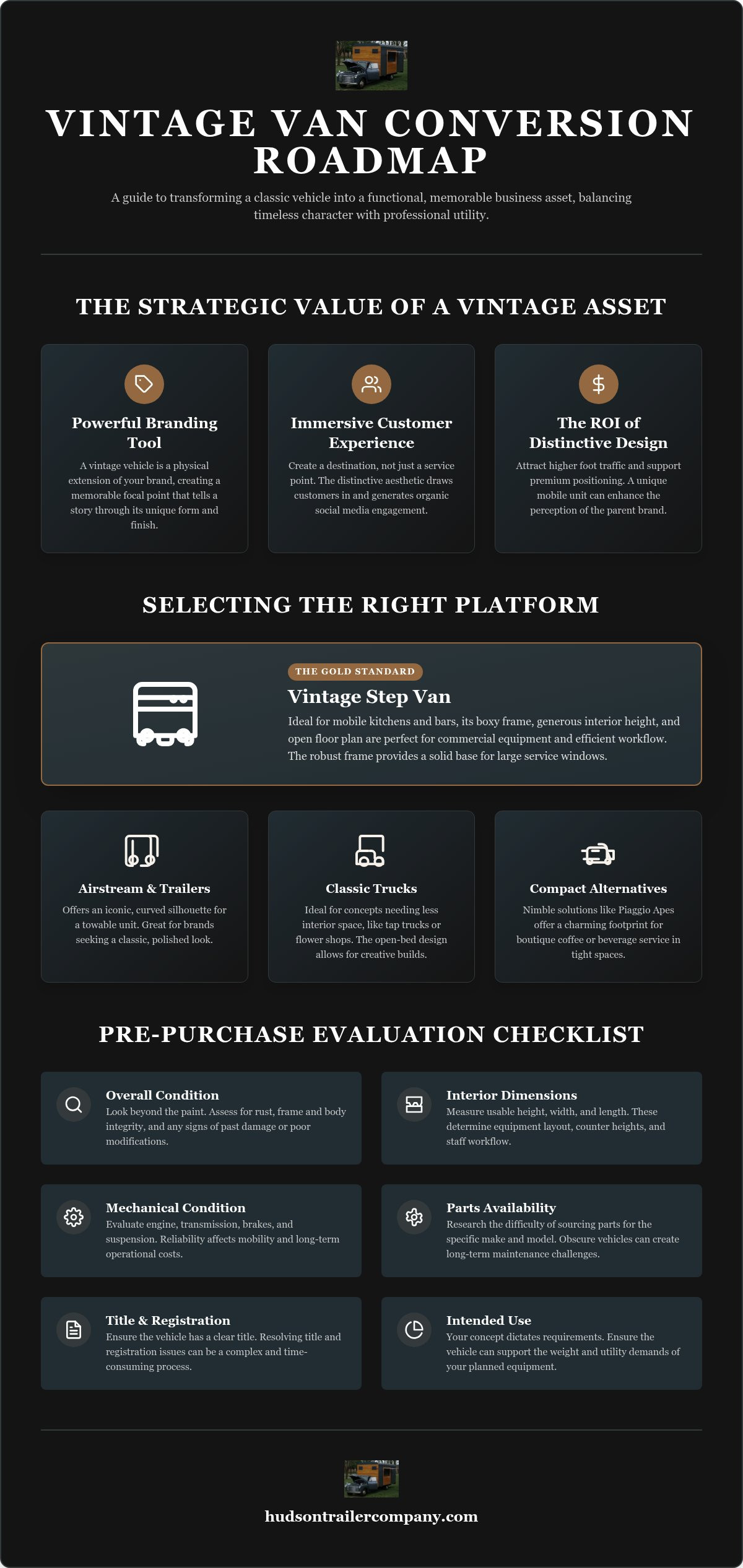
In a competitive market, a distinctive presence is invaluable. Vintage vehicles possess an inherent character that creates a memorable focal point at resorts, private events, or community gatherings. This visual appeal often translates into organic social media engagement, as customers are drawn to the unique aesthetic of a thoughtfully renovated step van or classic truck.
While a modern food truck is built for pure function, a vintage conversion serves a dual purpose: it is both an operational hub and a powerful branding tool. For developers and hospitality groups, these mobile assets offer a flexible way to activate underutilized spaces and provide amenities that enhance the guest experience.
Defining the Mobile Brand Environment
A successful conversion creates an immersive customer experience that begins the moment the vehicle is seen. It’s not just transportation; it’s a destination. The design choices—from polished aluminum and custom automotive paint that reflect a property’s identity to dramatic service windows that frame the staff and products—all contribute to this environment. The vehicle becomes a physical extension of the brand, telling a story through its form and finish.
The ROI of Distinctive Design
Justifying the investment in a custom vintage build comes from its potential to attract customers and support premium positioning. The unique character of a vintage platform can generate higher foot traffic and customer interest compared to standard mobile units. A vintage conversion can also create a "halo effect," where the positive association with the unique mobile unit enhances the perception of the parent brand. For high-end hospitality clients, these vehicles serve as functional art pieces that deliver a tangible service.
Selecting the Right Platform: Step Vans vs. Classic Trucks
The choice of vehicle is the foundation of any vintage van business conversion. The platform dictates the project's potential, from interior workflow and equipment capacity to the overall aesthetic. While many classic vehicles have visual appeal, not all are suited for the structural and spatial demands of a commercial operation.
Popular choices include:
The Vintage Step Van: Widely considered the gold standard for mobile kitchens and bars, the boxy frame of a vintage step van offers crucial interior height and a relatively open floor plan. This structure is ideal for integrating commercial equipment and allowing staff to work efficiently.
Airstream and Specialty Trailers: For those who prefer a towable unit, vintage trailers like Airstreams offer an iconic, curved silhouette. The decision between a motorized vehicle and a trailer often depends on operational needs, site logistics, and brand identity.
Compact Alternatives: For smaller-scale operations or tight spaces, vehicles like Piaggio Apes and Tuk Tuks offer a charming and nimble solution for boutique coffee or beverage service.
The Vintage Step Van Advantage
The practical benefits of a vintage step van are significant for a business. Its generous interior dimensions allow for more logical staff workflow and the installation of necessary commercial equipment, such as under-counter refrigeration and multi-group espresso machines. The robust frame provides a solid base for mounting heavy items and cutting large service windows without compromising structural integrity. It's important to remember that unless specifically contracted, the original mechanical components—engine, transmission, and suspension—are typically treated as-is, with the focus placed on the commercial conversion of the vehicle's body. Explore our vintage step van projects to see how these platforms are transformed.
What Should You Know Before Buying a Vintage Van for Conversion?
Purchasing a vintage vehicle based solely on its appearance can lead to significant challenges. Before acquiring a van or truck for a commercial project, it’s essential to conduct a thorough evaluation. Do not assume a particular vehicle will work for your concept before it has been reviewed by a fabrication partner.
Key considerations include:
Overall Condition: Look beyond the paint. Assess the vehicle for rust, frame and body integrity, and any signs of past damage or poorly executed modifications.
Interior Dimensions: Measure the usable interior height, width, and length. These dimensions will determine your equipment layout, counter heights, and staff workflow.
Mechanical Condition: While HTC's core role is the commercial conversion, the underlying mechanical state of the vehicle affects its mobility and reliability. Consider the engine, transmission, brakes, and suspension.
Parts Availability: Research how difficult it is to source parts for the specific make and model. Obscure vehicles can create long-term maintenance challenges.
Title and Registration: Ensure the vehicle has a clear title and can be legally registered in your state. Resolving title issues can be a complex and time-consuming process.
Intended Use: Your business concept dictates the platform's requirements. A high-volume coffee service has different needs than a mobile retail boutique. Ensure the vehicle can support the weight and utility demands of your planned equipment.
What Makes a Vintage Van Conversion More Complex Than a Standard Trailer Build?
Entrepreneurs are often drawn to the character of a vintage vehicle, but it's crucial to understand that these projects introduce variables not present in a new trailer or commercial chassis build. A vintage van conversion is not a predictable assembly-line process; it is a custom fabrication project shaped by the unique attributes of a decades-old platform.
Factors contributing to this complexity include:
Irregular Dimensions and Body Structure: Unlike new trailers with flat walls and square corners, vintage vans have curved surfaces, wheel wells, and existing structural ribs that must be worked around.
Mechanical and Structural unknowns: The condition of the frame, body, and mechanical systems is not always apparent until the project begins. Addressing rust, structural deterioration, or pre-existing damage adds time and complexity.
Limited Utility Space: Finding room for water tanks, plumbing lines, and electrical panels within the original chassis and bodywork requires careful planning.
Weight Distribution: Heavy commercial equipment must be placed strategically to ensure proper weight distribution over the vehicle's original axles and suspension.
Equipment Clearances: Fitting modern commercial equipment into a compact vintage space requires precise measurements to ensure proper ventilation, service access, and workflow.
Interior Height and Access: Many vintage platforms have limited interior height, which can impact staff comfort and the ability to install certain types of equipment, like ventilation hoods. Access for running plumbing and electrical lines is often more challenging than in an open-frame trailer.
The Conversion Process: From Concept to Completion
A successful vintage van business conversion follows a structured, methodical process that prioritizes function before form. Each step builds upon the last, ensuring the final build is both beautiful and operationally sound. The process is a collaboration between the client and the fabricator, turning a concept into a tangible, working environment.
Define the Menu and Service Model: The foundation of the design is what you will sell and how you will sell it. Your menu determines the equipment, which in turn dictates the floor plan and utility requirements.
Source and Integrate Approved Commercial Equipment: Before finalizing the layout, all major equipment must be selected. This "equipment-first" approach ensures that every component fits and has the proper utility connections.
Plan the Utility Core: With the equipment list finalized, the electrical loads, plumbing systems, and ventilation needs can be accurately calculated and designed. This includes sizing the generator, planning water tank capacity, and engineering the service panel.
Fabricate Custom Cabinetry and Finishes: Cabinetry, counters, and shelving are built to fit the vehicle's unique dimensions while balancing weight, durability, and aesthetics. Finishes are chosen to align with the brand identity and withstand the rigors of commercial use.
Complete Exterior Branding: The final stage involves custom paint, signage, and vinyl graphics that create a cohesive and professional brand presence.
Equipment-First Design Strategy
The single most critical phase of planning is equipment selection. You must choose your specific espresso machine, grinders, refrigerators, and ovens *before* the counters are built. A last-minute equipment substitution can have a cascading effect, altering voltage requirements, plumbing clearances, and counter dimensions. Under-counter refrigeration, for example, is essential in compact vintage spaces, but each model has unique ventilation and size requirements that must be accommodated in the cabinetry design.
Crafting the Interior Aesthetic
The interior of a vintage van should be as thoughtfully designed as its exterior. The goal is to create a space that is both highly functional for staff and inviting for customers. This can be achieved by using materials like warm wood for cabinetry, durable architectural paneling, and strategic use of stainless steel for food-safe surfaces. The interior becomes a branded environment that enhances the customer experience. See our hospitality portfolio for examples of how utility and aesthetics are balanced in our builds.
Navigating the Technical Core: Utilities and Compliance
The unseen systems—electrical, plumbing, and ventilation—are the heart of any mobile business. Proper planning and execution of these technical components are essential for reliable, day-to-day operation. This phase requires a deep understanding of how commercial equipment functions in a mobile environment.
Electrical Service: The electrical system, whether 30-amp or 50-amp service, must be sized to handle the total load of all your equipment running simultaneously.
Plumbing Essentials: A typical mobile food service setup includes a hand sink and a three-compartment sink, along with fresh and waste water tanks. The size and configuration must meet the requirements of your local health jurisdiction.
Compliance and Health Standards: There is no single national health code. The client is responsible for researching and providing the specific requirements for their intended operating jurisdiction *before* the build is contracted. These local rules affect everything from surface finishes to plumbing layouts. While a fabricator can design and build to these supplied requirements, they cannot guarantee final approval from a health inspector.
When is a Paid Research & Development (R&D) Phase Necessary?
For particularly distinctive or unusual vintage vehicle conversions, a standard design process may not be sufficient. In these cases, The Hudson Trailer Company may require a paid research and development phase before the project is contracted. This phase is used to evaluate feasibility, confirm equipment fit, map out service flow, and analyze jurisdiction requirements and other project-specific considerations.
The R&D phase is a crucial risk-mitigation step for complex projects, allowing both the client and the fabrication team to move forward with a clear, validated plan. The current HTC R&D fee is $2,500 and is credited toward the contract price when the client proceeds with the full build.
Realizing Your Vision with The Hudson Trailer Company
The Hudson Trailer Company's approach is to coordinate design, fabrication, and equipment integration into a single, cohesive project. We work with entrepreneurs and established brands to translate their vision into a functional, physical reality. Throughout the build, clients receive progress photographs at key construction stages, ensuring transparency and alignment.
Before any unit is released, all systems are tested to verify they are operational. This process confirms that the electrical, plumbing, and integrated equipment function as designed. Our experience with a wide range of hospitality clients, including resorts and developers, informs our ability to manage the unique demands of a commercial mobile build.
The Coordinated Fabrication Experience
The journey from an ambitious concept to a finished mobile business involves hundreds of coordinated decisions. Custom fabrication is about more than just assembly; it's about problem-solving and craftsmanship. Custom trailer projects generally take approximately 16–20 weeks from the start of production, while vintage vehicle conversions may take longer depending on the vehicle's initial condition, project complexity, and sourcing requirements. All builds are covered by a 90-day limited warranty on HTC workmanship.
Next Steps for Your Mobile Business
To prepare for a productive initial consultation, it is helpful to have a clear idea of your menu and service model. This information allows us to begin discussing potential layouts, equipment needs, and suitable platforms. It is also important to note that clients are responsible for arranging, contracting, insuring, and paying for the transport of their completed vehicle from our fabrication shop in Jacksonville, Florida. We can provide contacts for carriers familiar with transporting custom vehicles, but we do not provide delivery services.
Have a mobile business concept in mind? Contact The Hudson Trailer Company to discuss the platform, menu or service model, equipment, workflow, and design requirements for your project.
Frequently Asked Questions
How long does a vintage van business conversion typically take? While custom trailer projects generally take approximately 16–20 weeks from the start of production, a vintage van business conversion often takes longer. The final timeline depends on the initial condition of the vehicle, the complexity of the build, equipment sourcing, and other fabrication requirements. A precise timeline can be estimated only after the project has been fully scoped.
Do I need to provide my own equipment for the conversion? The Hudson Trailer Company prefers to source, price, and integrate all commercial equipment as part of the contracted build. This ensures that every component is compatible with the layout, electrical, and plumbing systems. Equipment must be selected and approved before fabrication can be finalized.
Will my vintage van be roadworthy and reliable after the conversion? HTC’s core role is the commercial conversion and fabrication. Unless mechanical restoration is specifically included in the contract, we do not warrant or assume responsibility for the engine, transmission, suspension, brakes, or overall roadworthiness of the original vintage vehicle.
Can a vintage van meet modern health department codes? Yes, a vintage van can be configured to meet modern health standards. However, the client is responsible for providing the specific code requirements from their local health jurisdiction. We then design and fabricate the interior systems—such as plumbing, finishes, and layout—to those supplied specifications. Final approval is granted by the local inspector.
Does Hudson Trailer Company handle the shipping of the completed unit? No. Clients are responsible for arranging, contracting, insuring, and paying for their own transportation. We can provide a list of third-party carriers who have experience with our projects, but HTC does not offer a delivery service.
What kind of power source do I need for a mobile coffee or bar van? The power source is determined by your specific equipment list. After calculating the total electrical load, we can recommend the appropriate generator size and electrical service (e.g., 30-amp or 50-amp). Many operators also utilize shore power when available at their event or location.
Can you convert a vintage vehicle into a mobile retail shop instead of food service? Absolutely. We design and fabricate a wide range of mobile businesses, including retail pop-ups, brand activation vehicles, and mobile showrooms. The design process is adapted to focus on shelving, displays, lighting, and customer flow rather than kitchen equipment.
What is the payment structure for a custom conversion project? Unless otherwise specified in the contract, our standard payment schedule is a 50% non-refundable deposit to secure a place in the production schedule, a 25% mid-project payment, and a final 25% payment due upon completion and before the vehicle is released for transport.


Comments