Piaggio Ape Coffee Truck Builders: A Guide to Bespoke Compact Hospitality
The Piaggio Ape is more than a vehicle; it’s a rolling icon of Italian charm. For luxury resorts, high-end developers, and entrepreneurs, transforming this compact three-wheeler into a sophisticated coffee bar is a compelling vision. The process, however, demands more than just aesthetic appreciation. It requires a deep understanding of spatial limitations, commercial equipment, and operational workflow. Finding the right Piaggio Ape coffee truck builders means partnering with a firm that can balance the vehicle’s distinctive character with the practical realities of a professional hospitality business.
A successful conversion is a carefully coordinated project where design serves function. The appeal lies in the Ape’s small footprint and memorable appearance, but its size also introduces significant constraints. A professional builder navigates these challenges by designing a cohesive system where every component—from the espresso machine to the water tanks—is selected and integrated before fabrication even begins. This guide explores the essential considerations for designing and building a compact mobile coffee business that is both visually stunning and operationally sound.
The Allure of the Piaggio Ape: Why Brands Choose Compact Charm
The enduring appeal of the Piaggio Ape is rooted in its rich history and whimsical design. Its compact frame and vintage aesthetic create an immediate, positive connection with customers, turning a simple coffee service into a memorable experience. For high-end brands, this visual impact is a powerful tool for creating a distinctive brand touchpoint that feels both authentic and intentional.
Historical Charm and Modern Appeal: The classic Italian design evokes a sense of nostalgia and craftsmanship, setting a premium tone before the first drink is served.
Excellence in Niche Environments: Compact units are uniquely suited for luxury resorts, golf courses, pedestrian plazas, and indoor-outdoor event spaces where larger trucks or trailers cannot operate.
Aesthetic Impact: The visual novelty of a vintage-style vehicle naturally engages customers, creating organic photo opportunities and enhancing brand visibility.
Balancing Mobility and Identity: The Ape provides a mobile solution that doesn't compromise on high-end branding, allowing for custom paint, premium finishes, and integrated signage.
Maximizing Impact in Limited Service Areas
In a resort or development environment, a custom Piaggio Ape can function as a permanent amenity, adding value and character to the property. Its small size allows it to be placed in courtyards, by the poolside, or along walking paths, activating underutilized spaces. Through thoughtful design, it becomes a piece of functional art. Polished finishes, dramatic service windows, and custom-branded interiors transform the vehicle into a visual anchor that tells a story about the brand’s commitment to quality and detail.
The Strategic Advantage of Mobile Versatility
The mobility of a Piaggio Ape offers unparalleled flexibility. The same unit that provides morning espresso service by the pool can be relocated to support an evening cocktail hour or a corporate event activation in another part of the property. This versatility allows hospitality managers to adapt their food and beverage offerings to meet guest needs throughout the day. Professional Piaggio Ape coffee truck builders design these units to be self-contained, enabling seamless transitions between locations where traditional food and beverage infrastructure is unavailable. For properties looking to enhance their guest experience, this adaptability is a significant strategic advantage. You can see how this principle applies to larger builds in our work with hotel and resort F&B trailers.
Designing the Perfect Pour: Workflow in a Compact Piaggio Ape
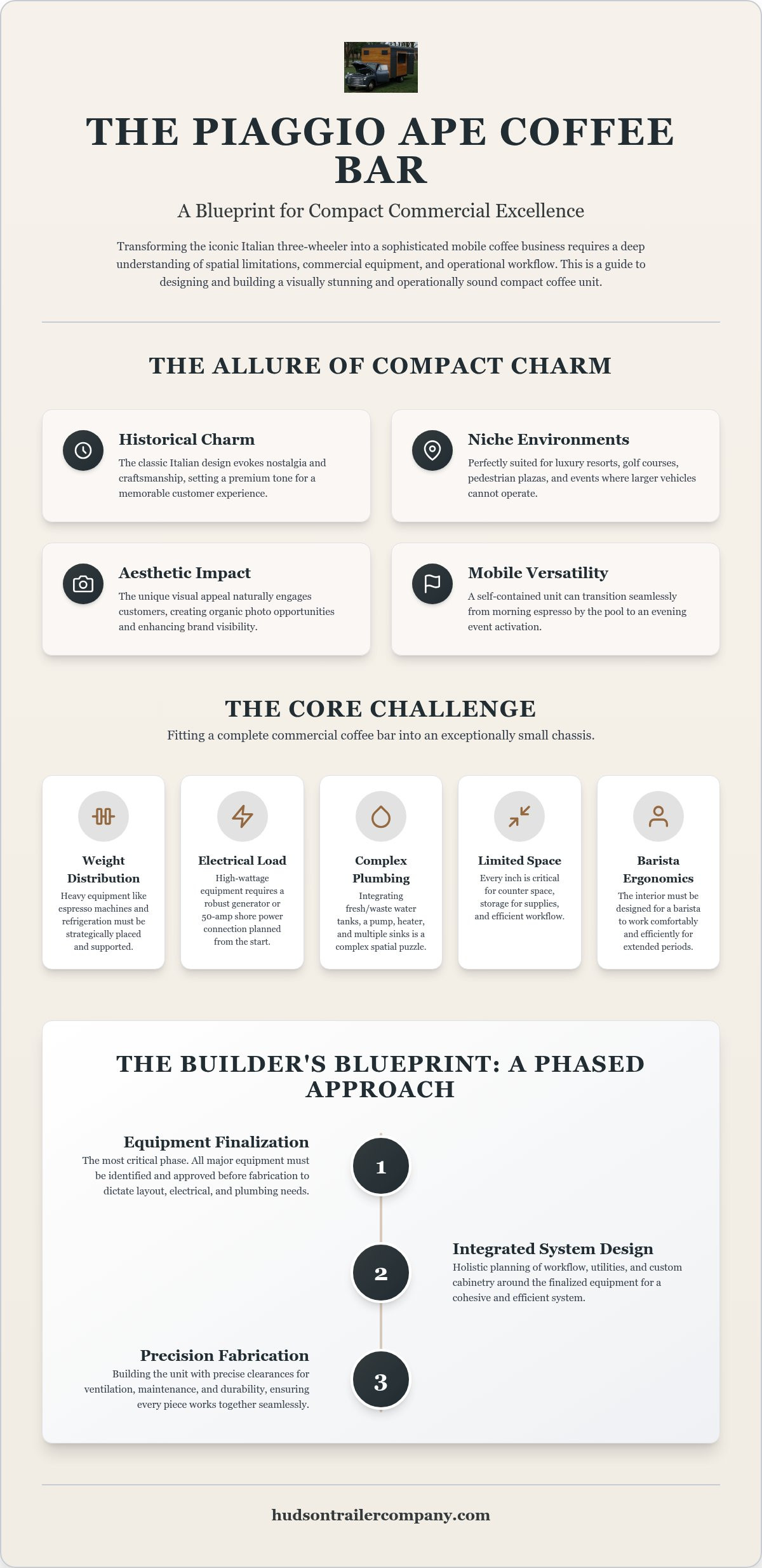
The central challenge of a Piaggio Ape conversion is fitting a complete commercial coffee bar into an exceptionally small chassis. Unlike a standard trailer or step van, every inch of space is critical, and every piece of equipment must be chosen for its efficiency and compact footprint. This is not a matter of simply installing appliances; it is a holistic design process where equipment, utilities, and workflow are planned in unison.
The design must account for the real-world constraints of the platform. These include:
Equipment Size and Weight: A two-group commercial espresso machine, grinders, and under-counter refrigeration add significant weight that must be properly distributed and supported by the chassis.
Electrical Load: High-wattage equipment like espresso machines and water heaters requires a robust electrical system, often necessitating a powerful generator or a 50-amp shore power connection, which must be planned from the outset.
Plumbing and Water: Integrating fresh and waste water tanks, a water pump, a water heater, and required sinks (hand-wash and potentially a three-compartment sink) is a complex spatial puzzle.
Counter and Storage Space: Limited counter space demands a highly efficient layout for tamping, pouring, and serving, while all necessary storage for cups, lids, beans, and milk must be cleverly integrated.
Ergonomics: The interior must be designed to allow a barista to work comfortably and efficiently for extended periods without feeling overly constrained.
Custom Cabinetry and Countertop Solutions
In a Piaggio Ape, custom cabinetry is not a luxury—it is a necessity. Off-the-shelf solutions will not fit the vehicle’s unique curves or maximize its limited volume. The Hudson Trailer Company designs and fabricates cabinetry that is both beautiful and functional, often using a combination of durable stainless steel countertops and the warmth of sealed wood finishes. Workflow optimization in this context means every element has a purpose; knock boxes are recessed into the counter, milk pitcher rinsers are strategically placed, and refrigeration is positioned for easy access, all to streamline the barista’s movements and reduce service times.
Integrated Equipment Coordination
The single most important phase of a Piaggio Ape build is equipment selection. Because every component affects the layout, electrical plan, and plumbing, all major equipment must be identified and approved before fabrication begins. The Hudson Trailer Company works with clients to source the right equipment for their concept, ensuring that each piece fits within the spatial and utility constraints of the build.
Changing an espresso machine model mid-project, for example, could alter the required counter depth, demand a different electrical circuit, and change the plumbing connections, leading to significant delays and redesigns. By finalizing the equipment list early, HTC can design cabinetry with precise clearances for ventilation and maintenance, calculate the total electrical load to size the generator and power inlet correctly, and ensure every piece works together as part of a cohesive system.
The Builder’s Blueprint: Key Features of a Professional Conversion
Choosing between a bespoke fabrication and a DIY or modular approach is a critical decision. While the allure of a lower upfront cost is tempting, professional Piaggio Ape coffee truck builders provide value through integrated design, structural integrity, and the use of commercial-grade materials. A professionally built unit is designed from the ground up to handle the rigors of daily commercial use.
Structural Integrity: The original Piaggio Ape chassis was not designed to carry the weight of a commercial espresso machine, water tanks, and refrigeration. A professional builder reinforces the frame and suspension to safely manage the load.
Commercial-Grade Materials: Finishes like polished aluminum, sealed butcher block, and food-safe FRP (Fiber-Reinforced Plastic) are chosen for their durability, cleanability, and ability to meet health department standards.
Integrated Systems: Electrical and plumbing systems are not afterthoughts; they are designed into the build to be safe, reliable, and serviceable.
Lighting and Presence: Thoughtful lighting design, including interior task lighting and exterior ambient lighting, ensures the unit is a dramatic and inviting presence, day or night.
Turnkey Design vs. DIY Conversions
A turnkey design from a professional builder like The Hudson Trailer Company coordinates every aspect of the build into a single, cohesive project. This process mitigates the risks associated with DIY conversions, where non-commercial materials may not withstand the demands of a food service environment and where uncoordinated systems can lead to operational failures. A professional build ensures that the electrical system can handle the load, the plumbing is leak-free and compliant, and the finishes are durable enough for commercial cleaning. For clients seeking inspiration for larger projects, our portfolio of custom coffee trailers showcases this integrated approach on a different scale.
The Production Timeline and Milestones
A custom fabrication project is a detailed and methodical process. After the design is approved and all equipment selections are finalized, the production phase for a custom build typically begins at approximately 16 weeks, with more complex projects potentially requiring more time. Reputable builders provide a clear structure for the project, including a payment schedule, which is often 50% to begin, 25% at a mid-point milestone, and the final 25% upon completion. Throughout the build, clients should expect to receive progress photography at key stages, allowing them to see their vision come to life and confirm that the build is proceeding as planned.
From Vision to Venue: Navigating Compliance and Logistics
While a builder fabricates the physical unit, the client retains responsibility for navigating the local regulatory landscape. Health department codes, business licensing, and insurance are jurisdiction-specific, and a successful launch depends on careful planning and coordination.
It is also important to have realistic expectations regarding the vehicle itself. A vintage Piaggio Ape is not a modern delivery van. Its mechanical systems are older, and it is not designed for daily highway commuting between distant locations. Most operators choose to transport their Ape to a venue via a larger truck or trailer, using its own power only for short-distance positioning on-site.
Client Responsibility for Approvals: The client is responsible for understanding and providing their local health department requirements to the builder.
Designing to Your Requirements: The builder uses the client’s provided specifications to design a layout that incorporates necessary features like multi-compartment sinks and hand-washing stations.
Mechanical Reliability: Unless specifically included in the contract, mechanical reliability and roadworthiness of a vintage vehicle are not guaranteed.
Insurance and Transportation: The client must secure the appropriate business insurance and arrange for third-party transportation of the completed unit from the builder’s facility.
Health Department Coordination
Health codes vary significantly between states, counties, and even cities. There is no single national standard. To facilitate a compliant build, the client must engage with their local health authority early to obtain the specific rules for a mobile food establishment in their area of operation. This information—covering everything from surface finishes and water tank capacity to sink requirements—is then provided to the builder. The Hudson Trailer Company uses these client-provided requirements to inform the design, but the ultimate responsibility for plan submission, permitting, and passing final inspection rests with the client.
Logistics and Transport Planning
Once your custom Piaggio Ape is complete, you will need to arrange for its transportation. Professional builders can often recommend third-party carriers experienced in moving custom vehicles, but the client is responsible for contracting with, insuring, and paying the transporter. It is also crucial to plan for the unit’s arrival at its operating venue. This includes confirming site suitability, ensuring access to necessary utilities like power and water, and verifying that the ground surface can support the unit. You can see examples of completed units in their final environments in our client portfolio.
Designing Your Legacy: Partnering with Piaggio Ape Coffee Truck Builders
A custom Piaggio Ape coffee truck is more than just a piece of equipment; it is a mobile expression of your brand. It is an asset designed to create a unique and memorable guest experience. The right builder acts as a collaborative partner, guiding you through a process that moves from initial concept to a fully realized, operational unit. This journey involves detailed discussions about your menu, service model, and brand identity to ensure the final product is a perfect reflection of your vision.
By investing in a thoughtfully designed and professionally fabricated mobile business, you create a distinctive amenity that can enhance your property’s appeal and set your brand apart. The process is a partnership focused on turning a creative concept into a tangible, functional reality.
Strategic Brand Activations
Beyond daily service, the Piaggio Ape is an ideal platform for experiential marketing and strategic brand activations. Its unique appearance draws a crowd, making it perfect for product sampling, pop-up events, or creating an Instagrammable moment at a corporate function. High-end resorts and hospitality groups trust professional builders to create these mobile extensions of their brands because they understand that quality fabrication and design reflect directly on their own reputation for excellence.
Start Your Concept Discussion
The first step in any custom project is a detailed conversation. Before you can get a quote or a timeline, you need to define the core elements of your mobile business. This includes preparing your menu, deciding on a service model, and creating a preliminary list of the essential equipment you will need to operate. This foundational work allows a builder to understand the scope and complexity of your project.
Have a mobile business concept in mind? Contact The Hudson Trailer Company to discuss the platform, menu or service model, equipment, workflow, and design requirements for your project.


Comments