Experiential Marketing Trailer Fabrication: Engineering Immersive Brand ROI
The Foundation of Engagement: How Fabrication Quality Shapes Brand Experience
In experiential marketing, the goal is to create a memorable, immersive interaction between a brand and its audience. While campaign strategy and staffing are critical, the physical environment where that interaction takes place sets the stage for success. Marketing directors assessing the ROI of experiential marketing trailers often focus on metrics like impressions and lead generation, but those outcomes are directly influenced by the quality, design, and functionality of the mobile unit itself.
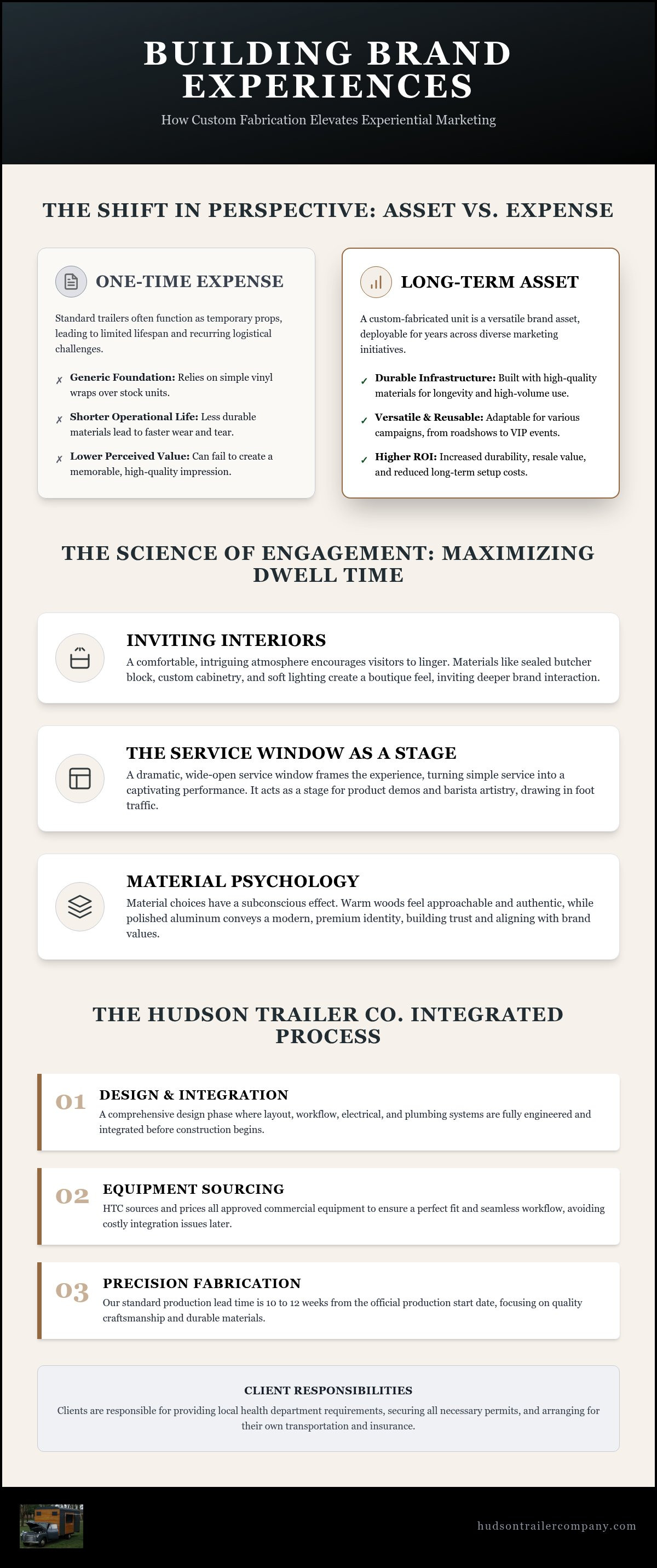
Experiential marketing fabrication is the practice of transforming a mobile platform—whether a vintage Airstream, a classic step van, or a custom-built trailer—into a tangible expression of a brand’s identity. It moves beyond simple vinyl wraps on stock trailers, focusing instead on creating bespoke environments with thoughtfully chosen materials, integrated equipment, and carefully planned workflows. These units are not temporary props; they are durable brand assets designed to host meaningful customer engagements across multiple campaigns and locations.
The shift toward custom fabrication reflects a deeper understanding of audience perception. A thoughtfully designed mobile unit with warm wood cabinetry, polished metal surfaces, and intentional lighting communicates quality and permanence, inviting customers to step inside and engage. It creates a "destination mindset," where the trailer itself becomes a compelling attraction rather than just a vehicle for dispensing samples.
Beyond Impressions: The Value of Dwell Time
The most effective brand activations encourage customers to do more than just glance or grab a free item; they invite them to stay. Dwell time—the length of time a person spends engaging with an experience—is a powerful indicator of a campaign’s impact. The design and fabrication of a mobile unit play a central role in extending this engagement.
Inviting Interiors: A well-designed interior creates a comfortable and intriguing atmosphere. Unlike the cold, industrial feel of standard concession trailers, the use of materials like sealed butcher block, custom cabinetry, and soft, layered lighting makes a space feel more like a permanent boutique or café. This encourages visitors to linger, explore, and interact more deeply with the brand and its products.
The Service Window as a Stage: A dramatic, wide-open service window does more than facilitate transactions; it frames the brand experience. It acts as a stage for product demonstrations, barista artistry, or mixology, turning the simple act of service into a captivating performance. Thoughtful placement and design of these windows can draw in foot traffic and create natural opportunities for conversation.
Material Psychology: The choice of materials has a subconscious effect on visitors. Warm woods and tactile surfaces feel approachable and authentic, while polished aluminum and clean lines can convey a modern, premium identity. The right material palette helps build trust and aligns the physical experience with the brand’s established values.
The Asset vs. Expense Debate
Viewing a custom-fabricated trailer as a long-term brand asset, rather than a one-time marketing expense, fundamentally changes the conversation around its value. A bespoke build is a versatile piece of infrastructure that can be deployed for years across diverse marketing initiatives, from national roadshows to VIP events at luxury resorts.
High-quality materials like heavy-gauge aluminum, stainless steel countertops, and durable flooring ensure the unit withstands the demands of transport and high-volume use. This durability translates into a longer operational life and the potential for higher resale value compared to standard trailers. Furthermore, a self-contained unit with integrated utilities and equipment reduces the recurring costs and logistical complexities associated with setting up temporary event spaces, allowing marketing teams to focus on the activation itself.
Translating Brand Identity into a Mobile Footprint
The core challenge of experiential marketing fabrication is to distill the essence of a brick-and-mortar brand presence into a compact, mobile format. This requires a design-driven approach where every element, from the exterior finish to the interior hardware, is chosen to tell a cohesive brand story. The goal is to create a mobile experience that feels just as authentic and compelling as a brand’s flagship store or hotel property.
This translation goes beyond logos and color schemes. It involves capturing a brand’s unique atmosphere through the interplay of light, texture, and space. Custom lighting can highlight key products or architectural features, attracting foot traffic from across a crowded event space. Finishes like custom paint, branded awnings, and unique hardware reinforce the brand identity at every touchpoint, ensuring the unit is instantly recognizable and visually appealing.
Ultimately, these design decisions directly influence the "shareability" of an activation. A visually stunning trailer is more likely to be photographed and shared on social media, amplifying the campaign's reach organically. This digital word-of-mouth is a significant component when evaluating the overall ROI of experiential marketing trailers.
Visual Richness and Material Selection
The materials used in a mobile build are the building blocks of the brand experience. For audiences accustomed to high-end environments, the visual and tactile quality of the unit is paramount.
The Appeal of Authenticity: Polished aluminum, particularly on iconic platforms like Airstreams, evokes a sense of timeless design and quality. Paired with warm interior elements like wood cabinetry or custom tile, it creates a sophisticated yet welcoming environment that resonates with discerning customers.
Cohesive Brand Presence: Custom automotive-grade paint allows for perfect color matching to brand guidelines, while professionally applied graphics and signage ensure a polished look. This attention to detail creates a seamless visual identity that distinguishes a custom build from a generic trailer with a temporary wrap.
Balancing Form and Function: Material selection must balance aesthetic goals with the practical realities of mobile use. Surfaces need to be durable, easy to clean, and able to withstand vibration during transport. The process involves selecting materials that not only look the part but are also fit for the demands of a national tour or a busy season at a resort.
The Service Window as a Brand Stage
The service window is the primary point of interaction between staff and customers, making its design a critical element of the mobile experience. It is the physical threshold where the brand’s hospitality is delivered and where customer perceptions are formed. A well-designed service area considers both the external guest experience and the internal operational workflow.
Positioning the service window for optimal visibility and customer flow is key. It should be inviting from a distance and allow for easy, intuitive ordering and pickup. The design can also create a sense of theater, showcasing the preparation of a craft coffee or a signature cocktail. This "on-stage" aspect of the service adds to the overall experience, making it more engaging and memorable. Internally, the placement of the window dictates the layout of equipment and countertops, directly affecting the speed and efficiency of the service team.
Operational Integrity: Integrated Design for a Seamless Experience
A successful mobile brand activation depends on flawless execution. Behind every memorable customer interaction is a well-planned operational system, and that system is built into the trailer’s core design. An integrated approach to fabrication, where equipment, utilities, and workflow are considered from the outset, is essential for preventing the operational issues that can undermine an otherwise great campaign.
This is why The Hudson Trailer Company coordinates the sourcing and pricing of all major equipment before construction begins. Knowing the exact dimensions, voltage, and plumbing requirements of every espresso machine, refrigerator, and oven allows for a layout where everything fits and functions perfectly. This foresight prevents costly and time-consuming modifications mid-project and ensures the final unit is a cohesive, fully functional environment. By designing the space around the specific equipment and intended workflow, the build can support high-volume service without compromising the customer-facing aesthetic.
Coordinating Utilities: Electrical and Plumbing Systems
The unseen utility systems are the lifeblood of any mobile operation. Their proper design and installation are critical for reliable performance, especially at off-grid locations like golf courses or outdoor festivals.
Electrical Service: The total electrical load of the specified equipment determines the required service. A simple activation might only need a 30-amp connection, while a unit with a commercial espresso machine, multiple refrigerators, and air conditioning will likely require a 50-amp service. Sizing the electrical panel and wiring correctly from the start ensures all equipment can run simultaneously without issue. Generator requirements are also calculated based on this total load, ensuring sufficient power for off-grid events.
Plumbing Systems: Depending on the concept, a trailer may require a complex plumbing system that includes a hand sink, a three-compartment sink for warewashing, fresh and wastewater tanks, a water heater, and a pump. The system must be designed to meet the client’s provided local health code specifications and accommodate the water needs of all equipment, such as coffee brewers, ice wells, and dish sprayers.
Workflow and Ergonomics in Compact Spaces
In the limited footprint of a trailer, every inch matters. Thoughtful workflow design ensures that staff can move efficiently, safely, and comfortably, even during peak service hours. This focus on ergonomics is not just about comfort; it directly impacts service speed, order accuracy, and the overall quality of the customer experience.
Key considerations include positioning frequently used equipment within easy reach, ensuring adequate counter space for preparation and service, and designing storage solutions that are both accessible and secure. Counter heights are set for comfortable working postures, and clearances between equipment are planned to allow for proper ventilation and maintenance access. By creating an intuitive and efficient workspace, the design allows the brand’s ambassadors to focus their energy on what matters most: engaging with customers.
Choosing a Platform: Character, Function, and Brand Alignment
The choice of vehicle or trailer platform is one of the most important decisions in a project, as it establishes the foundational character of the mobile experience. The Hudson Trailer Company’s strength lies in its ability to work across a diverse range of platforms, allowing brands to select a unit that truly aligns with their identity rather than being forced into a standard model. From the iconic silhouette of an Airstream to the nostalgic charm of a vintage step van, the right platform becomes a powerful brand asset before a single customer is served. For a deeper look at how a mobile unit can enhance a brand's physical assets, explore our guide on Turnkey Mobile Business Design for Hotels.
Iconic Appeal: The Airstream Conversion
With its gleaming, polished aluminum shell and distinctive curved shape, the Airstream is an American icon that signals quality and timeless design. This makes it a natural choice for hotel groups, resorts, and premium brands seeking to create an elevated food and beverage or retail experience. The reflective surface beautifully mirrors its surroundings, whether a pristine golf course or a vibrant city square. Fabricating within the Airstream’s curved walls presents unique design challenges, requiring custom cabinetry and precise layouts to maximize the interior space, a process HTC has refined across numerous projects. Learn more about our approach to these unique builds at Airstream Business Conversions.
Vintage Character: Step Vans and Specialty Vehicles
For brands cultivating a retro, rustic, or artisanal identity, a vintage vehicle offers unmatched character. Renovated step vans, with their boxy, utilitarian shape, provide a spacious and versatile canvas for mobile boutiques, coffee bars, or galleries. Their large openings are ideal for creating dramatic service windows or retail displays. Other specialty platforms, such as classic horse trailers, can be transformed into charming mobile bars perfect for country clubs and wedding venues. Even compact vehicles like Piaggio Apes and Tuk Tuks can be converted into delightful, eye-catching units for targeted activations in smaller spaces. Explore the possibilities of these character-rich platforms in our gallery of Vintage Step Van Renovations.
The Fabrication Process: From Concept to Completion
Bringing a custom mobile experience to life is a collaborative and structured process. Understanding the key stages, timelines, and responsibilities helps ensure a smooth journey from the initial design conversations to the final handover of the completed unit. While every project is unique, the process follows a clear path designed for transparency and quality.
The standard production lead time is typically 10–12 weeks, beginning from the scheduled production start date after all design decisions, equipment selections, and approvals are finalized. The project is structured with a standard 50/25/25 payment schedule, which includes an initial non-refundable deposit to secure a place in the production schedule, a mid-project payment, and a final payment upon completion. Throughout the build, clients receive progress photography at key milestones, allowing them to see their vision take shape.
Compliance and Regulatory Responsibilities
Navigating the web of local regulations is a critical aspect of any mobile business launch. It is the client's responsibility to research and provide The Hudson Trailer Company with the specific health department and regulatory requirements for their intended area of operation. HTC then configures the build to meet those provided specifications for systems like plumbing and electrical.
The client is also responsible for all aspects of permitting and licensing, including submitting plans for review, securing local permits, and arranging for any required inspections. Before the unit is delivered, the client must also confirm that the intended operating site is suitable, with appropriate access and any necessary utility connections. This clear division of responsibilities ensures that the build is aligned with local codes while empowering the client to manage their business's legal and operational standing.
Transport and Handover
Upon completion of the build and receipt of the final payment, the client is responsible for arranging the transportation of their new unit. This includes contracting with a carrier, securing the necessary insurance for transport, and coordinating pickup from HTC’s Jacksonville, Florida, facility. Before the unit is released, all systems are tested to ensure they are functioning as designed. It is important to note that for vintage vehicles, mechanical condition and roadworthiness are separate from the fabrication work and are the client’s responsibility unless specifically contracted otherwise. This final handover marks the transition of the project from a build in progress to a brand asset ready for its first activation.


Comments