Defining Distinctive Mobile Brand Experiences: A Design-First Approach to Modern Hospitality
The Evolution of Distinctive Mobile Brand Experiences
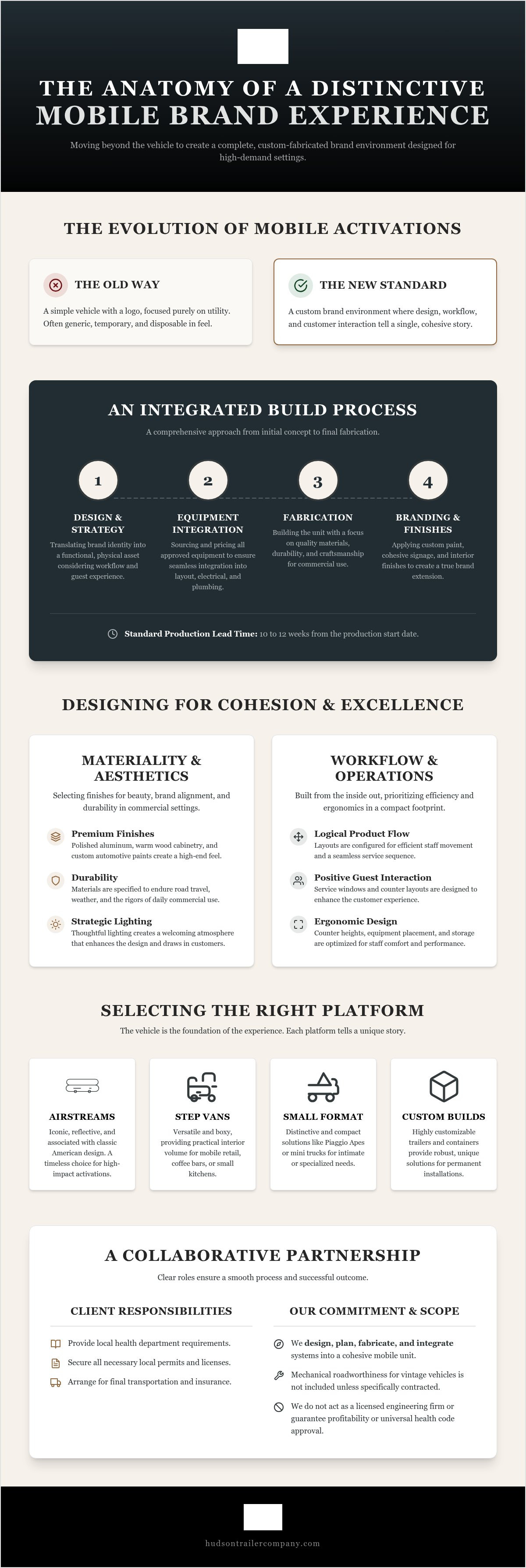
A truly effective mobile activation is more than a vehicle with a logo; it is a complete, custom-fabricated brand environment. The modern approach to mobile business moves beyond simple utility to create distinctive mobile brand experiences where the platform, design, workflow, and customer interaction are all part of a single, cohesive story. This represents a significant shift from the era of generic food trucks to the development of unique commercial assets designed to operate in demanding environments.
Visual storytelling through thoughtful fabrication has become the new standard. Whether the goal is to launch a new product, extend a retail footprint, or offer a unique food and beverage service, the physical presence of the mobile unit sets the stage. The use of iconic or unusual platforms—from vintage Airstreams to classic step vans—can create an immediate connection with an audience, transforming a simple transaction into a memorable moment.
Beyond the Standard Trailer: A New Era of Mobile Business
Today’s most compelling mobile projects are designed as thoughtful extensions of a brand’s physical identity. Developers and established businesses are using custom mobile units as versatile amenities for residential projects, corporate campuses, and public spaces. The careful selection of materials, polished finishes, and integrated branding directly influences customer perception, communicating a commitment to quality before the first product is even served. This approach allows businesses to create permanent or semi-permanent installations that feel intentional and integrated, rather than temporary or disposable.
The Strategic Advantage of a Physical Brand Presence
A custom mobile unit provides the unique ability to meet customers where they are, from private events and country clubs to music festivals and farmers' markets. The design of the unit itself becomes a powerful tool for engagement. Features like dramatic service windows, custom lighting, and unique material palettes create compelling visual moments that encourage social sharing. Functionally, these units also offer a practical way for established brands to test new menus, retail concepts, or service models with minimal infrastructure investment, gathering direct feedback from their target audience in a controlled, branded setting.
Designing for Brand Cohesion and High-Demand Environments
Creating a mobile unit that aligns with an established brand aesthetic requires a design-first approach. The goal is to build a physical asset that feels like a natural extension of the core brand, whether it’s parked outside a boutique hotel or serving customers at a corporate headquarters. This involves a careful consideration of materiality, workflow, and the overall guest experience.
The importance of materials cannot be overstated. Finishes like polished aluminum, warm wood cabinetry, and custom automotive paint contribute to a specific look and feel, while also being specified for durability in a commercial setting. The design must also support high-volume service without feeling cluttered or sacrificing its visual appeal. This balance is achieved by integrating the brand identity through cohesive signage, interior finishes, and a layout that supports the intended operational flow.
Materiality and Aesthetic Standards
Choosing the right materials is a critical decision that impacts both appearance and longevity. Finishes must be selected to endure the elements, road travel, and the rigors of daily commercial use while maintaining a clean and professional look. Lighting plays a key role in shaping the environment, creating a welcoming atmosphere that draws customers in, especially during evening hours. A successful design often balances the character of a vintage platform with modern, clean lines and functional interior components, resulting in a space that is both visually interesting and operationally sound.
Workflow and Operational Excellence
A well-designed mobile unit is built from the inside out, starting with the intended workflow. The layout must be configured for efficient staff movement, logical product flow, and positive guest interaction, all within a compact footprint. Ergonomics are crucial; counter heights, equipment placement, and storage solutions are all designed to support the team during long service periods. Ultimately, the mobile unit should function as a professional commercial space, providing a platform for operational excellence. For businesses in the hospitality sector, this means creating a unit that serves as a functional extension of a professional kitchen or bar. For example, a well-designed mobile bar for a resort must accommodate high-volume beverage service with the same efficiency as its brick-and-mortar counterpart. You can see examples of this approach in these hotel and resort F&B trailers.
Selecting the Platform: From Airstreams to Vintage Step Vans
The choice of vehicle or trailer is the foundational decision in creating distinctive mobile brand experiences. The platform itself tells a story and sets a tone. From the timeless appeal of a polished Airstream to the industrial charm of a vintage step van, each type of platform offers a unique canvas for a mobile business or brand activation.
The options are diverse, catering to different operational needs, aesthetic goals, and site constraints. Airstream conversions are often chosen for their iconic, reflective shells that attract attention. Vintage step vans provide a larger, more versatile interior perfect for mobile retail or coffee shops. For more intimate or compact needs, small-format vehicles like Piaggio Apes and Tuk Tuks offer a distinctive solution. For more permanent installations, custom-built trailers and modified shipping containers provide a robust and highly customizable alternative.
The Iconography of the Airstream
The Airstream remains a popular and effective choice for mobile brand activations. Its polished aluminum shell is instantly recognizable and associated with classic American design. The Hudson Trailer Company renovates vintage Airstream shells, outfitting them with modern commercial systems and finishes while preserving their historic character. This process transforms a piece of history into a functional, road-ready commercial asset. Explore various Airstream renovations for commercial use to see how these classic trailers are adapted for modern business.
Repurposing History: Step Vans and Vintage Trucks
Vintage step vans and trucks bring a unique character to mobile retail and food service concepts. Their boxy shape provides a practical interior volume for complex layouts, including coffee bars, small kitchens, or boutique shops. The process of renovating these vehicles involves more than just cosmetic changes; it requires integrating modern electrical, plumbing, and mechanical systems into a classic automotive platform to support commercial operations. The result is a mobile business with a strong narrative and visual identity, as seen in these vintage step van renovations.
Specialty Platforms: Tuk Tuks and Horse Trailers
Not every mobile concept requires a large footprint. Specialty platforms like the Piaggio Ape or converted horse trailers offer creative solutions for specific needs. A three-wheeled Piaggio Ape, for instance, can be transformed into a charming and efficient mobile espresso bar, perfect for navigating event spaces or pedestrian plazas. Similarly, horse trailer conversions have become popular for boutique mobile bars, leveraging their rustic charm for weddings and private events. The key challenge with these smaller platforms is designing a layout that accommodates all necessary professional equipment while meeting operational and compliance requirements.
Integrating the Core Systems: A Cohesive Build Process
A successful mobile unit is a complex system where equipment, electrical, and plumbing are fully integrated. This requires a coordinated approach where every component is planned before fabrication begins. The selection of commercial equipment—from espresso machines to refrigeration—is the first step, as it dictates the entire layout, cabinetry design, and utility requirements.
Calculating electrical loads is essential for sizing generators or shore power connections appropriately for high-volume service. Likewise, plumbing systems must be designed to accommodate everything from required hand sinks to advanced water filtration for specialty coffee applications. This integrated design and fabrication process ensures all systems work together harmoniously within the finished unit.
Equipment Sourcing and Integration
The Hudson Trailer Company coordinates the sourcing of all approved commercial-grade equipment, including espresso machines, refrigeration, and specialized beverage systems. This practice is central to a cohesive build. By managing equipment procurement, HTC ensures that custom cabinetry, countertops, and shelving are fabricated to precise dimensions. This prevents costly and time-consuming modifications during the build and results in a clean, integrated finish. Designing the mobile unit around the specific equipment from the start is fundamental to a successful outcome. This is especially evident in projects like custom coffee trailers, where the placement of grinders, brewers, and espresso machines defines the entire workflow.
The Infrastructure of a Mobile Unit
The underlying infrastructure is what enables a mobile unit to function as a professional business. Plumbing systems are configured to support the operational flow and are designed with local health department requirements in mind, as provided by the client. Electrical systems are planned to manage the specific loads of the approved equipment, whether it requires 30-amp or 50-amp service. Proper ventilation and climate control are also critical considerations, particularly in units with cooking or heat-producing equipment, ensuring a safe and comfortable environment for staff.
The Fabrication Process: From Concept to Completion
The journey from a conceptual layout to a road-ready mobile business is a structured, multi-stage process. It involves careful planning, transparent communication, and a deep collaboration between the client and the fabrication team. Understanding the typical production timeline and the division of responsibilities is key to a smooth project.
The standard production lead time is typically 10 to 12 weeks, beginning from the scheduled production start date after all design decisions have been finalized and equipment has been selected. It is important to note this window refers to the fabrication period and not the total project timeline from initial contact. Throughout the build, clients receive progress photography at key milestones. Before the project is released, it undergoes final testing of its systems.
The Integrated Build Process
Initial design decisions have a cascading effect on the final operational workflow. The placement of a service window, for example, influences counter space, equipment layout, and customer queueing. The role of a custom fabrication shop like The Hudson Trailer Company is to act as both a builder and a consultant, guiding clients through these decisions to ensure the final product is both visually compelling and highly functional. Finishes, paint, and branding application are all coordinated within a single fabrication timeline, resulting in a cohesive and thoughtfully executed build.
Preparing for Launch: Logistics and Compliance
While HTC fabricates the physical unit, the client is responsible for all operational and regulatory aspects. This includes understanding and providing all local health department, zoning, and fire safety requirements for their intended area of operation before fabrication begins. Securing the necessary permits and licenses is a client-led process. Upon completion, the client must also arrange for their own transportation and insurance for the mobile unit. The final step involves on-site testing and the transition of the unit from the fabrication shop to its new operating environment, ready to serve as the foundation for a new business or brand activation. Many clients use their units for experiential marketing, deploying them at events and strategic locations.
Frequently Asked Questions
How long does it take to build a custom mobile brand unit? The standard production lead time for most projects at The Hudson Trailer Company is 10 to 12 weeks. This period begins on the scheduled production start date, which occurs after the design is finalized, all equipment selections are approved, and the initial deposit is received. This does not represent the total project timeline from your first inquiry.
What is the best vehicle platform for a mobile brand experience? The "best" platform depends entirely on your concept, brand identity, and operational needs. Polished Airstreams offer an iconic, high-end look. Vintage step vans provide a spacious, character-rich canvas for retail or coffee concepts. Smaller platforms like Piaggio Apes are ideal for specialized, compact services like espresso bars.
Do you provide the equipment for the mobile units? The Hudson Trailer Company prefers to source and integrate all the major commercial equipment for your build. This allows us to design and fabricate cabinetry, counters, electrical, and plumbing systems around the exact dimensions and utility requirements of your specific appliances, ensuring a fully integrated and functional final product.
Are these mobile units road-ready? Newly fabricated trailers are delivered with a Manufacturer's Certificate of Origin (MCO) for titling and registration by the client. For vintage vehicle conversions, any work on mechanical systems (engine, transmission, brakes) is a separate scope of work and is not included unless specifically contracted.
Do you handle health department permits for the trailers? No. The client is responsible for understanding and providing all requirements from their local health department and other regulatory bodies. HTC fabricates the unit to the client-provided specifications, but the client is solely responsible for submitting plans, securing permits, and passing inspections in their jurisdiction.
Can you convert a vintage vehicle we already own? Yes, The Hudson Trailer Company frequently works with client-provided vintage trailers and vehicles. We will assess the platform's condition to determine its suitability for a commercial conversion.
What are the electrical requirements for a high-volume mobile bar? Electrical requirements are calculated based on the specific equipment list for your project. A high-volume unit with ice machines, extensive refrigeration, and blenders may require a 50-amp connection or a large generator, while a simpler concept might operate on a 30-amp service. This is determined during the design phase.
Do you provide national delivery for completed projects? The client is responsible for arranging, insuring, and paying for the transportation of their completed project. HTC can provide contact information for third-party carriers familiar with moving custom vehicles and trailers, but we do not contract or manage shipping directly.
Have a mobile business concept in mind? Contact The Hudson Trailer Company to discuss the platform, menu or service model, equipment, workflow, and design requirements for your project.


Comments