Golf Course Beverage Trailer Design: A Luxury Hospitality Checklist
Strategic Design for On-Course Beverage Service
For premier golf courses and private clubs, on-course food and beverage service is a fundamental part of the member and guest experience. While traditional beverage carts serve a functional purpose, a custom-designed mobile unit offers a more versatile and intentional solution. A thoughtful golf course beverage trailer design moves beyond simple utility, creating a flexible hospitality hub that can be positioned wherever it’s needed most—whether at the turn, near a practice facility, or as a central feature for tournaments and private events.
The primary goal is to bring convenient, high-quality service closer to the players, enhancing the flow of the day without disrupting the pace of play. Unlike stock carts, a purpose-built trailer is planned around a specific menu, workflow, and brand identity. This allows it to function as a seamless extension of the clubhouse, reflecting the property's architectural style and level of service. By focusing on a design that fits the property, clubs can create flexible beverage locations that support daily play and special events with equal effectiveness.
Defining Your Service Model
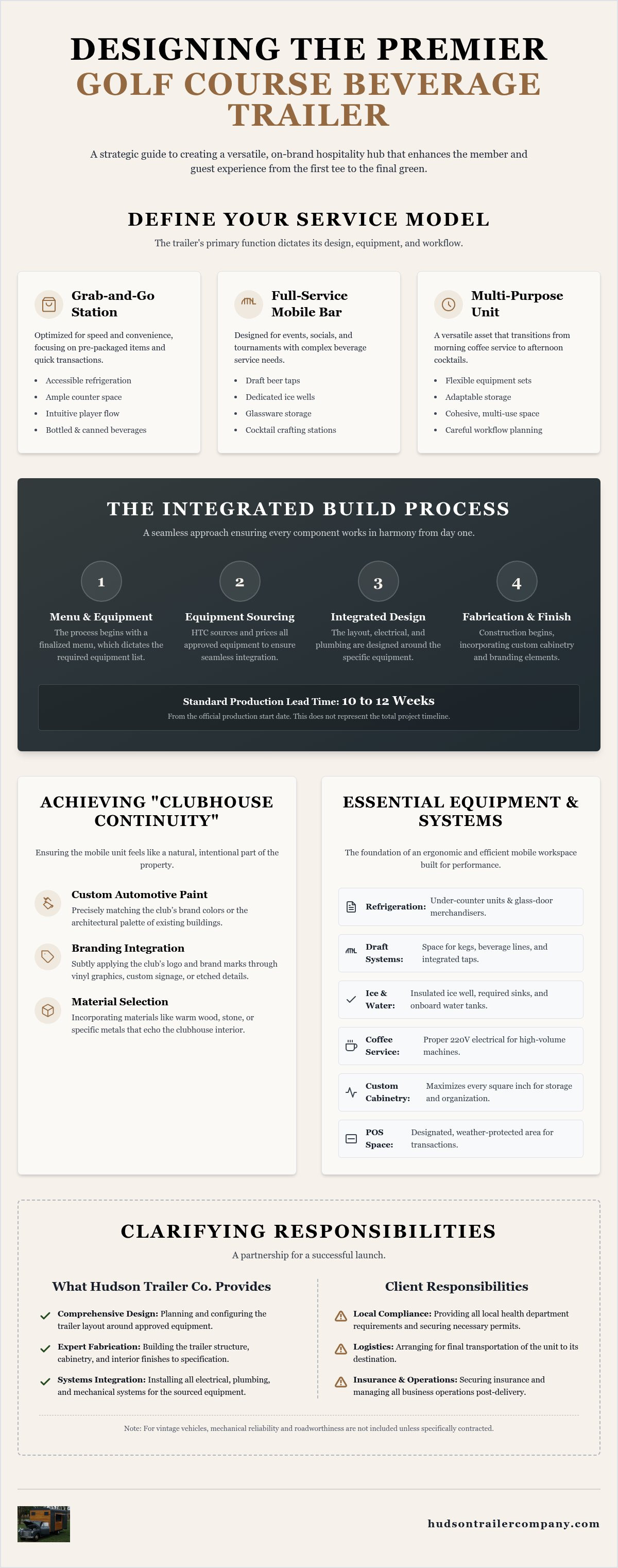
Before exploring design specifics, it’s essential to define the trailer’s primary function. The service model dictates the required equipment, interior layout, and overall footprint. Consider the different roles the unit may need to fill:
Grab-and-Go Station: Optimized for speed, this model focuses on pre-packaged snacks, canned and bottled beverages, and quick-service items. The design prioritizes accessible refrigeration, ample counter space for transactions, and an intuitive flow for players making a brief stop.
Full-Service Mobile Bar: Intended for events, member socials, and tournaments, this setup requires more complex systems. The design may include draft beer taps, dedicated ice wells, glassware storage, and stations for crafting cocktails. Service windows and counters are designed to be inviting for guests who may linger.
Multi-Purpose Unit: Many clubs need a versatile asset that can adapt throughout the day. A well-designed trailer can serve espresso and pastries in the morning and transition to cocktails and light bites in the afternoon. This requires careful planning to accommodate different equipment sets, storage needs, and workflows within a single, cohesive space.
A custom build allows a club to create a unit tailored to its specific operational needs, ensuring the final asset aligns perfectly with its hospitality program. For clubs looking to enhance their on-course offerings, a custom unit provides a durable and branded solution. You can explore a range of possibilities for golf and country club mobile bars that align with these service models.
Achieving Clubhouse Continuity
One of the most significant advantages of a custom beverage trailer is the ability to achieve ‘Clubhouse Continuity’—a design approach that ensures the mobile unit feels like a natural part of the property. Rather than a generic vehicle that feels out of place, the trailer’s materials, colors, and finishes can be selected to complement the main clubhouse and surrounding landscape. This can be achieved through:
Custom Automotive Paint: Precisely matching the club’s official brand colors or the architectural palette of existing buildings.
Material Selection: Incorporating materials like warm wood, stone countertops, or specific metal finishes that echo the clubhouse interior.
Branding Integration: Applying the club’s logo and other brand marks subtly and tastefully through vinyl graphics, custom signage, or etched details.
This attention to detail reinforces the club's identity and presents a consistent, polished image to members and guests at every touchpoint on the property.
Planning the Workflow: Equipment and Interior Layout
An effective golf course beverage trailer design is built from the inside out. The process should always begin with a finalized menu and a corresponding list of approved equipment. The dimensions, power requirements, and plumbing needs of each appliance dictate the trailer’s entire layout, from counter height and cabinet depth to the specifications of the electrical and water systems. At The Hudson Trailer Company, we coordinate the sourcing and pricing of all equipment before construction begins to ensure every component is integrated seamlessly into the final build.
This integrated approach prevents common issues like insufficient power, awkward workflows, or equipment that simply doesn’t fit. By planning the interior around the tools your staff will use every day, you create an ergonomic and efficient workspace. This maximizes speed of service during busy periods and allows a small team to operate effectively, minimizing congestion behind the counter and reducing ticket times.
Essential Equipment for On-Course Service
While every concept is unique, certain equipment is fundamental to most on-course beverage operations. Practical considerations for a golf environment include durability, power efficiency, and ease of cleaning.
Refrigeration: Under-counter refrigerators and freezers are the workhorses of any mobile unit, providing compact, accessible storage for beverages, dairy, and garnishes. For grab-and-go concepts, glass-door merchandisers can display drinks and snacks effectively. The total refrigeration capacity must be calculated based on projected volume for a full day of service.
Ice and Water: An insulated ice well with a drain is crucial for serving cold drinks. It is a more practical solution for mobile environments than a self-contained ice machine, which has significant power, water, and ventilation requirements. A dedicated hand-washing sink and, where required by local health codes, a three-compartment sink for warewashing are essential. Onboard fresh and waste water tanks must be sized for the unit's needs, and a water pump and heater provide necessary utility.
Draft Beverage Systems: For trailers serving draft beer or batch cocktails, the system must be planned from the start. This includes allocating space for kegs (often in a dedicated refrigerated unit), running beverage lines, and integrating taps and drip trays into the countertop.
Coffee and Espresso Service: High-volume coffee brewers and commercial espresso machines have specific electrical demands (often 220V) that must be planned for. The layout should also account for grinders, tamping stations, and storage for beans, cups, and condiments.
Point-of-Sale (POS) Space: A designated, weather-protected space for a POS terminal, cash drawer, and payment device is a practical necessity. This area should include dedicated outlets and data ports if needed.
Custom Cabinetry and Countertop Selection
Storage and surface space are premium commodities in a mobile unit. Custom cabinetry is not a luxury but a necessity for maximizing every square inch. The design should provide dedicated storage for dry goods, paper products, glassware, and cleaning supplies, keeping the workspace organized and uncluttered.
Material choices for countertops and cabinets impact both aesthetics and durability. Sealed butcher block or warm wood cabinetry can create a welcoming, high-end feel consistent with a clubhouse bar. For areas requiring maximum durability and sanitation, stainless steel remains the industry standard. Architectural paneling and other modern materials can also be used to achieve a specific design vision while meeting the demands of a commercial environment. The goal is to select materials that align with the club’s brand, withstand the rigors of daily use, and meet local health department requirements for cleanability.
Aesthetic Synergy: Aligning Mobile Units with Club Brand Identity
The exterior of a beverage trailer is a mobile billboard for the club's brand. A thoughtful design can turn a functional service point into a memorable landmark on the course. The choice of vehicle platform and exterior finishes plays a significant role in how the unit is perceived. Polished aluminum trailers, for example, offer a timeless, reflective quality that stands out against a green landscape, while a vintage step van can add a touch of classic character.
Custom paint allows for perfect color matching to the club's branding, while vinyl wraps offer opportunities for more complex graphics or promotional messaging. Dramatic service windows are also a key design element; large awning-style windows create an open, inviting interface between staff and players, protect guests from sun or light rain, and can be outfitted with custom lighting to enhance visibility and ambiance during evening events.
Material Choices for Lasting Appeal
The materials chosen for a beverage trailer must be suitable for constant exposure to the elements. Durability is as important as appearance. Different platforms offer distinct aesthetic opportunities:
Airstream-Style Trailers: The iconic look of polished or satin-finish aluminum is a popular choice for its classic appeal and durability. It provides a striking canvas for subtle branding.
Custom "Toaster" Trailers: A custom-fabricated trailer offers the most design flexibility. The shape, size, window placement, and materials can be fully customized to match a club's unique architectural identity.
Custom hardware, exterior lighting, and finishes all contribute to a cohesive final product that feels intentional and integrated into the property.
Branding and Visual Identity Integration
Integrating the club’s visual identity is the final step in creating a truly custom unit. This goes beyond simply placing a logo on the side. It involves a holistic approach to the trailer’s appearance.
Exterior Finishes: The choice between a full vinyl wrap and custom automotive paint depends on the design complexity and desired longevity. Paint offers a more permanent, seamless finish, while wraps allow for intricate, large-format graphics.
Lighting Design: Thoughtful lighting is essential for events that extend into the evening. Integrated exterior LED lighting can highlight the trailer’s architectural features, while backlit signage ensures the club’s brand remains visible after dark.
Creating a "Photo Op": A well-designed trailer often becomes a natural gathering spot and a popular backdrop for photos shared on social media. This organic marketing can be encouraged by creating a visually appealing and unique asset that members and guests are proud to feature.
Operational Logistics: A Checklist for Site Suitability and Compliance
A successful mobile hospitality project requires careful logistical planning long before the trailer arrives on site. The club or resort is responsible for ensuring all local requirements are met and that the chosen location can support the unit’s operational needs. This checklist covers the critical logistical considerations for any golf course beverage trailer design project.
Electrical Service Planning: The trailer’s total electrical load is determined by its equipment. A small unit with basic refrigeration might only need a 30-amp connection, while a trailer with an espresso machine, extensive refrigeration, and hot water could require a 50-amp or higher service. An electrician must verify that adequate power is available at the intended parking site(s).
Water and Waste Management: While trailers are built with onboard fresh and waste water tanks, a plan for refilling and emptying them is necessary. The site plan should include convenient access to a potable water source and a proper disposal location for greywater, in accordance with local regulations.
Health Department and Permitting: Health code requirements for mobile food and beverage units vary significantly by city, county, and state. It is the client’s responsibility to provide the applicable local requirements to the fabricator. The client also remains responsible for all aspects of permitting, licensing, alcohol approvals, and arranging for inspections. Early communication with the local health authority is crucial to ensure the design will meet all necessary standards.
Site Suitability and Access: The designated parking spot for the trailer must be level and stable. The ground surface should be able to support the weight of the unit without shifting or settling. Consider access routes for towing the trailer into position, ensuring there is adequate clearance from trees, buildings, and other obstacles.
Project Timeline Planning: The fabrication of a custom mobile unit is a detailed process. From final design approval and equipment sourcing to fabrication and finishing, a project generally requires a minimum of approximately 16 weeks and may extend six months or longer based on its complexity and current production commitments. Clubs should plan accordingly, especially when targeting a launch for a specific season or major event.
The Custom Fabrication Process with The Hudson Trailer Company
Bringing a unique vision for a mobile beverage unit to life is a collaborative, structured process. The Hudson Trailer Company specializes in the design and fabrication of custom mobile businesses, transforming trailers, Airstreams, and vintage vehicles into fully functional hospitality platforms. Our process is designed to be transparent and comprehensive, guiding clients from the initial concept to a finished, road-ready unit.
The journey is built on clear communication and defined milestones. Clients receive progress photography at key stages of the build, allowing them to see their vision take shape. Before any unit is released, it undergoes a thorough testing phase to ensure all systems—electrical, plumbing, and equipment—are functioning correctly. This turnkey approach coordinates the entire build, from the foundational layout to the final branded finishes, into one cohesive project.
From Concept to Completion
The fabrication process begins with a deep understanding of your operational goals. We work with you to refine your concept, select the right platform, and finalize an equipment list that supports your menu and service workflow. Our payment structure is designed for project transparency, typically following a 50% non-refundable deposit to commence work, a 25% mid-project payment, and a final 25% payment upon completion.
This partnership approach ensures the final build is not just a vehicle, but a purpose-built asset designed to meet the specific demands of your property and clientele. For a deeper look into our process, you can learn more about working with The Hudson Trailer Company.
Custom Platforms for Every Course
The right platform sets the tone for the entire project. The choice depends on the desired aesthetic, the complexity of the service model, and the overall vibe of the club.
Airstreams and Vintage Trailers: These platforms offer classic lines and a timeless appeal that fits well in many resort and club settings.
Piaggio Apes and Mini-Trucks: For smaller-footprint needs or a more whimsical feel, these compact vehicles can be transformed into charming coffee or cocktail bars.
Custom-Built Trailers: For maximum versatility, a custom-fabricated "Toaster" style trailer allows for complete control over size, layout, and window placement, making it an ideal choice for unique hospitality concepts.
Each platform offers a different canvas for creating a mobile beverage experience that is perfectly suited to its environment, a key consideration for hotel and resort F&B trailers as well as those for golf courses.
Frequently Asked Questions
What is the typical timeline for a custom beverage trailer? The timeline for a custom build varies based on complexity, platform sourcing, and current production schedules. Generally, a project requires a minimum of approximately 16 weeks from final design approval and can extend to six months or longer for highly complex builds. Planning well in advance of your target season is recommended.
Does The Hudson Trailer Company handle my local health department permits? No. The client is responsible for understanding and providing all applicable local and state health department requirements for their intended operating jurisdiction. The client is also responsible for submitting all plans and securing the necessary permits, licenses, and inspections required to operate.
Can I provide my own equipment for the trailer build? The Hudson Trailer Company prefers to source and price all approved equipment to ensure every component is properly integrated into the layout, electrical, and plumbing systems before construction begins. Substituting equipment can affect dimensions, utility requirements, and cabinetry, so coordinating all equipment through the fabricator is the most effective approach.
Are vintage vehicles reliable for daily use? Vintage vehicles like Airstreams or step vans are chosen for their aesthetic character. While they are fabricated with new, commercial-grade interiors, the original chassis, engine, and drivetrain are not restored unless specifically contracted. Clients should have a plan for regular vehicle maintenance with a qualified local mechanic.
What kind of power source does a golf course beverage trailer require? The power requirement depends entirely on the installed equipment. It can range from a 30-amp service for simple setups to a 50-amp or higher service for units with multiple pieces of high-draw equipment like espresso machines or large refrigeration units. A licensed electrician should be consulted to ensure your site can provide the necessary power.
Do you provide shipping for the completed unit? The client is responsible for arranging, contracting, insuring, and paying for the transportation of their completed unit. While HTC may be able to provide contacts for carriers familiar with transporting custom trailers, we do not manage shipping or delivery.
Can the trailer be designed for both coffee and alcoholic beverage service? Yes. Many of our most effective designs are multi-purpose units created to serve different menus throughout the day. This requires careful planning of the layout, storage, and utility systems to accommodate the workflow for both types of service efficiently.
What materials are used for the interior cabinetry and counters? We use a variety of commercial-grade materials based on the project's design goals and budget. Common choices include stainless steel for durability and sanitation, sealed butcher block for a warm aesthetic, and durable architectural paneling. All materials are selected to withstand the demands of a mobile commercial environment.
Have a mobile business concept in mind? Contact The Hudson Trailer Company to discuss the platform, menu or service model, equipment, workflow, and design requirements for your project.


Comments