The Elite Guide to Mobile Pop-Up Shop Builders: Designing Retail on the Move in 2026
Beyond Brick and Mortar: The Evolution of Mobile Retail Spaces
The concept of retail is no longer confined to static locations. Today, brands are creating memorable customer interactions with mobile pop-up shops, transforming everything from vintage vehicles to custom-built trailers into distinctive brand environments. A modern mobile pop-up is more than just a store on wheels; it is a thoughtfully designed space that brings a brand’s identity directly to its audience. This shift from permanent real estate to flexible, experiential models allows businesses to engage customers in unique settings, from city centers and festivals to private resorts and golf courses. A well-designed mobile unit serves as a dynamic marketing asset, creating visual appeal and drawing in customers wherever it goes.
The Rise of Experiential Marketing Units
Brands are increasingly using mobile retail to test new markets without the commitment of long-term leases, launch new products, or create immersive experiences that build community. The success of these units often hinges on their visual “stopping power”—an intriguing design that captures attention and invites curiosity. By integrating retail with hospitality, such as a clothing boutique that also serves craft coffee, businesses can create multi-faceted experiences. These experiential activation trailers become destinations in their own right, generating social media buzz and fostering a direct connection with consumers.
Why Custom Builders Outperform Standard Manufacturers
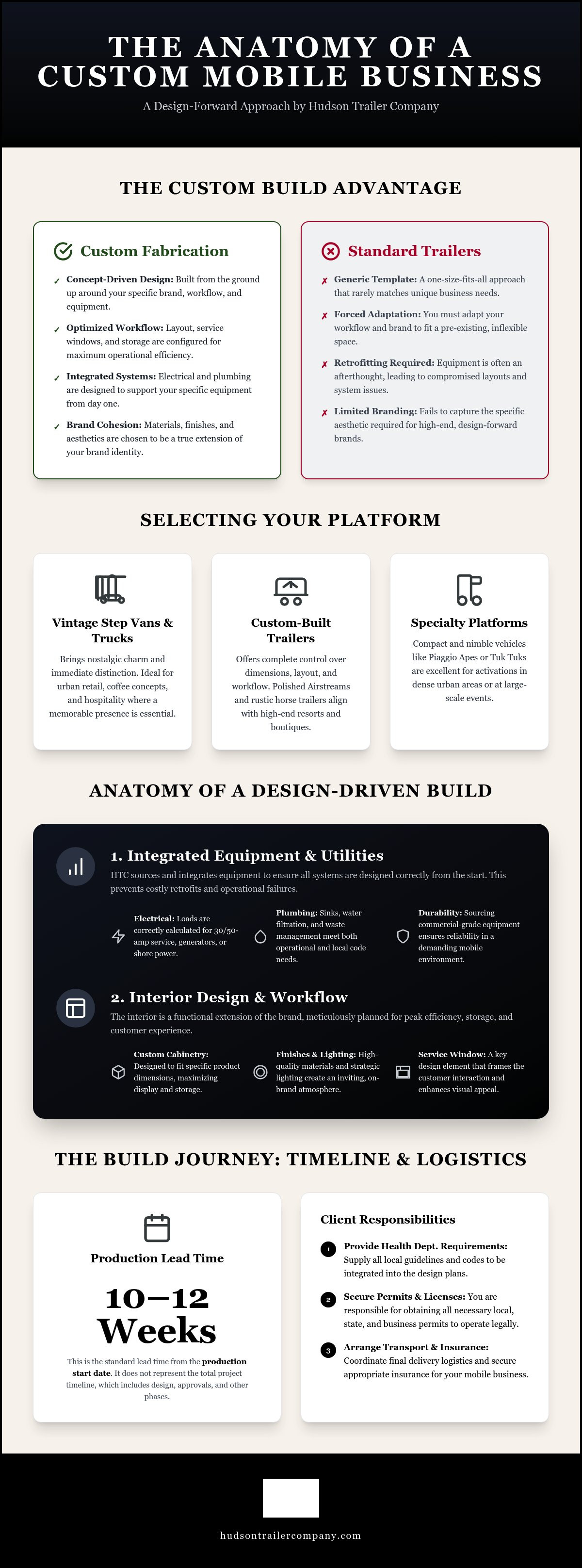
There is a significant difference between a mass-produced trailer and a custom-fabricated mobile business. Standard trailers are built to a generic template, forcing operators to adapt their workflow and brand to a pre-existing space. Custom mobile pop up shop builders, in contrast, start with the client’s specific concept. Every design decision—from the layout and service window placement to the electrical capacity and interior finishes—is rooted in the intended inventory, equipment, and customer flow. This design-forward approach is particularly valuable for businesses that require a specific aesthetic and operational efficiency to represent their brand accurately.
Selecting Your Platform: From Vintage Airstreams to Custom Fabrication
The foundation of any mobile pop-up shop is its platform. The choice of vehicle or trailer sets the tone for the entire customer experience and has significant functional implications. Evaluating the aesthetic and operational differences between modern trailers, vintage vehicles, and other specialty platforms is a critical first step in the design process. While a sleek, modern trailer offers a clean canvas, a renovated vintage vehicle brings a story and inherent character that can be a powerful branding tool.
Vintage Step Vans and Trucks
The unique character of a retro vehicle provides an immediate point of distinction in a crowded market. Renovating a vintage step van or truck allows a brand to blend nostalgic charm with modern functionality. The key is a thoughtful restoration process that preserves the vehicle's aesthetic integrity while updating its systems for reliable, day-to-day commercial use. These platforms are ideal for urban retail, coffee concepts, and hospitality services where a memorable presence is essential. For example, a restored vintage step van can serve as a mobile coffee bar at a boutique hotel or a pop-up shop in a bustling downtown district.
Custom-Built Trailers and Airstreams
Building a unit from the ground up allows for complete control over its dimensions, layout, and workflow. This approach ensures that every square inch is optimized for the specific operational needs of the business. The iconic, polished aluminum shell of an Airstream renovation, for instance, offers a timeless appeal that aligns well with resorts and high-end brands. Other platforms, like horse trailer conversions, provide a rustic charm perfect for mobile bars or small boutiques. The final selection often depends on site suitability, utility access, and the overall brand story the business wants to tell. Specialty platforms, such as Piaggio Apes and Tuk Tuks, are excellent for compact, nimble activations in dense urban areas or at large-scale events.
The Anatomy of a Well-Designed Mobile Pop-Up Shop
The success of a mobile retail unit is determined by more than its exterior appearance. A truly effective pop-up shop is a cohesive system where the interior design, equipment, and utilities are fully integrated to support a seamless workflow. Unlike builders who focus merely on square footage, a design-driven fabricator considers how the space will be used during peak hours. This involves careful planning of the electrical and plumbing systems, custom cabinetry, and merchandising displays to create an environment that is both functional and on-brand.
Integrated Equipment and Utilities
One of the most critical aspects of a custom build is the early integration of equipment. The specifications of refrigerators, display cases, point-of-sale systems, and other fixtures directly influence the design of the electrical, plumbing, and ventilation systems. For this reason, it is far more effective for the builder to source and integrate the approved equipment rather than trying to fit a pre-purchased item into the layout. This integrated approach ensures that:
Electrical loads are calculated correctly. The power requirements of all equipment determine whether the unit needs a 30-amp, 50-amp, or other service level, as well as the appropriate generator or shore power connection.
Plumbing is designed for the specific use case. This includes proper placement of hand sinks, water filtration systems, and waste management to meet both operational needs and local guidelines.
Interior Design and Merchandising Flow
The interior of a mobile pop-up shop should be an extension of the brand. Custom cabinetry and shelving can be designed to fit specific product dimensions, maximizing display potential and storage. Lighting strategies are crucial for highlighting merchandise and creating an inviting atmosphere, while durable, high-quality materials like sealed butcher block, stainless steel, and warm wood accents contribute to the overall aesthetic. A dramatic service window is more than just a transactional point; it is a key design element that frames the customer interaction and enhances the visual appeal of the entire unit.
Navigating the Build Process: Timeline, Compliance, and Logistics
Understanding the custom build process helps set clear expectations for timeline, budget, and responsibilities. A well-structured project involves collaboration between the client and the builder, with defined milestones from initial design to final delivery. While a fabrication shop manages the build itself, the client retains responsibility for securing local permits and arranging logistics.
The standard production lead time for a custom build is generally 10–12 weeks, beginning from the scheduled production start date after all design decisions, approvals, and equipment selections are finalized. A transparent process includes progress photography at key stages, allowing clients to see their vision come to life. The payment schedule is typically structured with a 50% non-refundable deposit to secure a production slot, a 25% mid-project payment, and the final 25% due upon completion before the unit is released.
The Road to Production: Approvals and Decisions
Before fabrication can begin, the concept, menu or inventory, and equipment list must be finalized. This foundational stage is critical because any subsequent changes can have a cascading effect on the project. For example, substituting one display refrigerator for another can alter the required cabinetry clearances, electrical amperage, and even the plumbing layout. It is the client’s responsibility to understand and provide their local health department and zoning requirements to the builder. The client must also confirm site suitability, ensuring that the intended operating location can support the unit with proper utility access and surface loading.
Logistics, Insurance, and Final Delivery
Once the build is complete, the client is responsible for arranging transportation. While some builders may offer contacts for carriers familiar with custom vehicles, they do not typically manage shipping directly. Final payment and proof of insurance must be provided before the unit can be picked up. For vintage vehicles, it is important to clarify that any work on mechanical reliability or road-readiness is a separately contracted service, distinct from the commercial interior build-out. The client must handle all aspects of titling, registration, and insurance for their new mobile business.
Partnering with a Custom Design and Fabrication Shop
Choosing the right mobile pop up shop builders is about finding a partner who understands how to translate a brand vision into a functional, physical space. The most capable builders act as collaborative guides, helping clients navigate the complex process of designing and fabricating a unique mobile unit. Their value lies not in offering a one-size-fits-all product, but in providing the expertise to build something truly distinctive.
The Hudson Trailer Company designs and fabricates custom mobile businesses using trailers, trucks, Airstreams, vintage vehicles, mini trucks, and other specialty platforms. Each project is developed around the client’s concept, approved equipment, workflow, operational requirements, and visual identity. HTC coordinates the contracted equipment, electrical systems, plumbing, cabinetry, counters, finishes, paint, windows, and branding into one cohesive build.
Tailored for Hospitality and Experiential Marketing
With a portfolio that includes projects for hospitality brands like Kohler and Treehouse Hotels, The Hudson Trailer Company specializes in creating mobile units for discerning clients. The focus is on designing for hotels, resorts, and developers who need to provide an elevated guest experience that aligns with their property’s standards. With over 200 completed projects, HTC brings a depth of design and operational insight to every build, ensuring the final product is as practical as it is visually compelling.
Collaborative Design for Unique Concepts
The process works best when it is a collaboration between the client’s vision and the builder’s fabrication expertise. The Hudson Trailer Company works closely with both entrepreneurs and established brands to realize their concepts, focusing on specific, concrete details that contribute to a successful mobile operation. The emphasis is on creating a mobile retail space that is a true reflection of the brand, built with durability and daily use in mind. Have a mobile business concept in mind? Contact The Hudson Trailer Company to discuss the platform, menu or service model, equipment, workflow, and design requirements for your project.
Frequently Asked Questions (FAQs)
How long does it take to build a custom mobile pop-up shop? A standard production lead time is generally 10–12 weeks. However, this timeline begins from the scheduled production start date, which occurs only after the design, equipment list, and all other key decisions have been finalized and approved. The total project duration can vary depending on the complexity of the build and the design finalization process.
What is the standard payment structure for a custom build? The typical payment schedule for a custom project is a 50% non-refundable deposit to reserve a spot in the production schedule, a 25% payment mid-way through the fabrication process, and a final 25% payment due upon completion and before the unit is released.
Do mobile pop-up shop builders handle health department permits? No, clients are responsible for all permitting and regulatory compliance. This includes researching and providing the local health department requirements for their intended area of operation, submitting plans for review, and securing all necessary permits, licenses, and inspections.
Can I provide my own equipment for the build? To ensure proper integration, it is strongly recommended that the builder sources and installs all equipment. The dimensions, power requirements, and plumbing needs of each piece of equipment directly impact the fabrication of cabinetry, counters, and utility systems. Integrating client-provided equipment can lead to delays and design complications.
What platforms are available for a mobile retail shop conversion? A wide variety of platforms can be used, including new custom-built trailers, vintage Airstreams, step vans, trucks, horse trailers, Piaggio Apes, and other specialty vehicles. The best platform depends on your brand aesthetic, operational needs, budget, and where you plan to operate.
Is transportation included in the cost of the mobile unit? No, clients are responsible for arranging and paying for the transportation of their completed unit from the fabrication facility. The builder may be able to provide contacts for shipping carriers, but the client must contract with them directly.
Are vintage vehicles road-ready after renovation? The renovation of a mobile business focuses on the commercial interior and systems. Mechanical work on the engine, transmission, brakes, and other chassis components of a vintage vehicle is a separate scope of work and is not included unless specifically contracted.
What utilities are required for a mobile retail shop? Most mobile shops require an electrical source, either from a generator or a shore power connection (e.g., a 50-amp outlet). They also need a water source to fill the fresh water tank and a plan for disposing of wastewater from the grey water tank, often managed through a designated commissary.


Comments